
Introduction
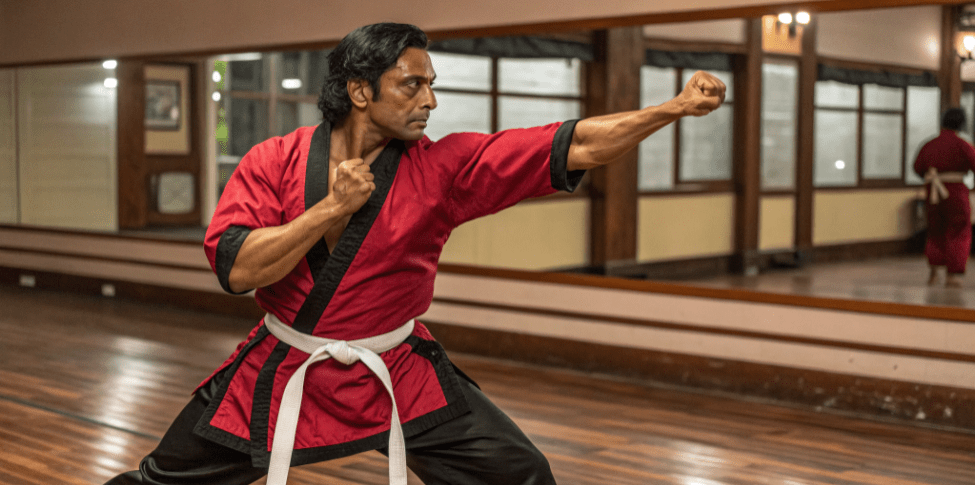
In a world of over eight billion people, buzzing with infinite distractions and digital noise, a small, dedicated fraction consistently commits to a practice as ancient as conflict itself. Across the globe, in humble dojos, gleaming gyms, and community centers, you’ll find them. They are the 3-5%—the individuals who have chosen the path of martial arts.
This statistic is more than a mere number; it’s a demarcation line. It separates the passive majority from an active minority who have decided to take personal responsibility for their safety, their health, and their mental fortitude. While 95% of the population may go their entire lives without throwing a disciplined punch or understanding the mechanics of a leverage-based takedown, this 5% is quietly building an unshakable foundation for life.
And let’s be unequivocal: in today’s climate, this choice is transitioning from a hobby to a critical life skill. Headlines scream of rising knife crime, brazen robberies, and random physical assaults. The world feels, for many, increasingly unpredictable. Meanwhile, the modern sedentary lifestyle is a slow-motion health crisis, eroding our strength, mobility, and vitality.
This article is for the 5%, and for those who are contemplating joining their ranks. It is a deep dive into the profound importance of your training, not just as a form of exercise, but as a shield, a sword, and a sanctuary in an uncertain world.
Part 1: The Stark Reality – A World on Edge
To understand the value of martial arts, we must first look candidly at the environment we navigate. Denial is not a strategy.
The Uncomfortable Truth About Violence
While crime statistics can fluctuate, the pervasive feeling of insecurity is at a global high. Social media and 24-hour news cycles bring incidents of violence directly into our pockets, making distant dangers feel imminent. Beyond the perception, hard data in many urban and suburban areas confirms troubling trends:
- Knife Crime: In numerous countries, knife-related offenses have seen a significant uptick. These are not gang-related incidents in a vacuum; they occur on public transport, in parks, and on busy streets. A knife is a weapon of proximity, and an attack can be close, fast, and brutal. The average person’s reaction—to freeze, to panic—is precisely what such predators rely on.
- Robberies and Muggings: Economic pressures and social decay have led to an increase in opportunistic theft. These are often crimes of surprise and intimidation. The assailant’s goal is to overwhelm your senses and will in the first few seconds, demanding your possessions through the threat of violence.
- Physical Assaults: From road rage incidents spilling over into physical altercations to unprovoked attacks, the spectrum of assault is wide. The common thread is the sudden, unexpected nature of the violation. In a split second, a normal day can become a fight for your well-being.
The traditional advice of “just comply” or “run away” is not always a foolproof solution. What if you can’t run? What if you’re cornered? What if your family is with you? Compliance does not guarantee safety, and hoping for the best is not a plan.
This is where the 5% diverge from the 95%. They have moved beyond hope and into preparation.

Part 2: Beyond the 95% – The Martial Arts Mindset as a Deterrent
Training in martial arts is not, as some mistakenly believe, about learning to fight. At its core, it is about learning not to have to fight. The benefits begin long before a physical confrontation is even a possibility.
The Armor of Awareness
The first and most potent skill developed in any legitimate martial art is situational awareness. Beginners walk in with their heads down, buried in their phones, tuned out from their environment. Through consistent training, they learn to “scan.” They notice exits, they observe body language, they identify potential threats before those threats are within range. This hyper-awareness, often called “Condition Yellow” in self-defense circles, becomes second nature. A predator is a hunter; they seek easy prey. The individual who is alert, who holds themselves with awareness, projects an aura of difficulty. They are skipped over for the distracted, the vulnerable, the passive.
The Language of Confidence
There is a palpable, non-verbal confidence that emanates from a person who knows they can handle themselves. It’s in the posture—the shoulders are back, the head is up, the gait is purposeful. It’s in the eyes—they meet the world directly, without aggression, but without submission. This isn’t the blustering, loud confidence of ego; it’s the quiet, deep-seated certainty of capability.
This confident demeanor is one of the most powerful deterrents available. Criminal interviews consistently reveal that attackers avoid people who look like they’ll put up a fight. They look for hesitation, for fear, for a lack of coordination. The martial artist, through thousands of repetitions of movement and scenario training, has replaced hesitation with competence and fear with controlled adrenaline.
De-escalation: The True Black Belt Skill
A common misconception is that martial artists are hot-headed. The opposite is true. The more you train, the more you understand the real, messy, and dangerous consequences of violence. You lose the romanticized Hollywood view of a fight.
Therefore, high-level training always includes verbal de-escalation. You learn to use a calm tone, non-threatening body language, and strategic communication to defuse a situation. You know how to create space, both physically and verbally. You give the potential aggressor a “way out” without them losing face, allowing them to disengage. Because you are confident in your physical abilities, you can afford to be humble, to apologize, to walk away. It is the person who is insecure and untrained who feels the need to prove themselves, often with catastrophic results.
Part 3: When Prevention Fails – The Physical Arsenal of the 5%
We train for the peace we hope for, but we are prepared for the reality we may face. If de-escalation fails and a physical confrontation is unavoidable, the 3-5% are not starting from zero. They have built a robust, reliable toolkit.
The Myth of the “Dirty Fighter”
Many people comfort themselves with the idea that they would “fight dirty” if attacked. But under the immense stress of a real assault, fine motor skills vanish. The body is flooded with cortisol and adrenaline, causing tunnel vision, auditory exclusion, and a loss of complex thought. The untrained mind and body devolve into a flailing, panicked mess. “Fighting dirty” requires precision—an eye gouge, a groin shot—that is nearly impossible to execute effectively under duress without thousands of hours of training.
Martial arts training is stress inoculation. It conditions the mind and body to perform under pressure.
- Aliveness Training: Arts like Brazilian Jiu-Jitsu, Muay Thai, Boxing, and Mixed Martial Arts (MMA) utilize “alive” training methods—sparring and rolling with a fully resisting opponent. This is the crucible where technique meets reality. You learn what works and what doesn’t when someone is genuinely trying to counter you. The chaotic, adrenalized feeling of a real attack is simulated in a controlled environment, building a neurological blueprint for effective action.
- Muscle Memory to Mind Memory: A technique drilled thousands of times becomes more than muscle memory; it becomes mind memory. Under stress, you don’t think, “Okay, now I need to pivot my left foot, rotate my hip, and extend my right fist.” The body simply reacts with the most ingrained, efficient movement. A jab-cross, a sprawl against a takedown, a basic hip escape—these become autonomic responses, like flinching from a hot surface.
- The Strategic Toolkit: Different martial arts offer different solutions to the problem of violence.
- Striking Arts (Boxing, Muay Thai, Karate): Teach you to control distance, to deliver powerful, accurate strikes, and to absorb impact. They are essential for keeping an attacker at bay and creating an opportunity to escape.
- Grappling Arts (Brazilian Jiu-Jitsu, Judo, Wrestling): Are indispensable for when the fight goes to the ground, a common and terrifying scenario for the untrained. They teach you how to get back to your feet, how to control a larger opponent using leverage, and how to apply submissions to neutralize a threat.
- Reality-Based Systems (Krav Maga, Kempo): Focus specifically on self-defense scenarios, targeting vulnerabilities and prioritizing rapid, overwhelming defense to facilitate escape.
The modern, well-rounded martial artist, the true member of the committed 5%, often cross-trains. They understand that a single style is a single tool, and a violent encounter is a complex puzzle that may require multiple tools to solve.
Part 4: The Unseen Shield – The Profound Physical Benefits
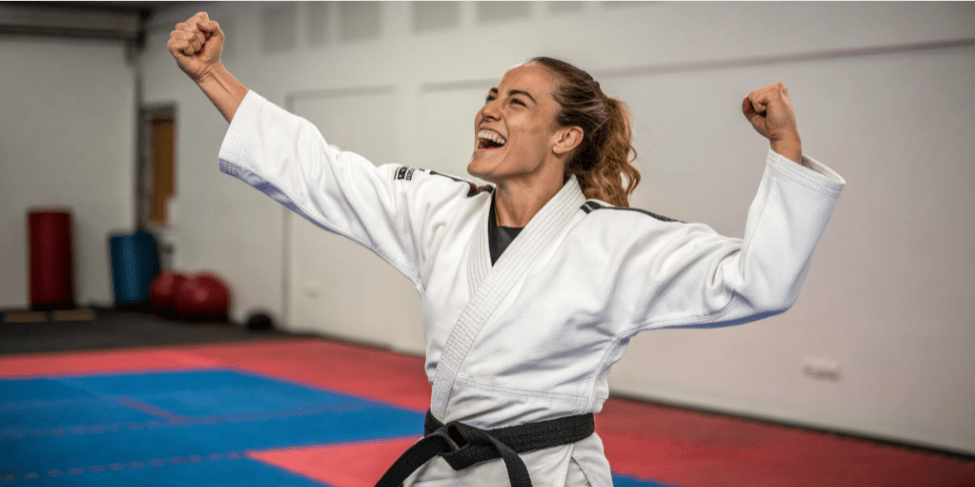
While self-defense is a powerful motivator, it is only one facet of the martial arts diamond. The daily, tangible benefits to your physical health are nothing short of transformative. In an era where the average person spends over nine hours a day sitting, martial arts is a rebellion for the human body.
Strength: The Functional Foundation
Forget the isolated, mirror-focused movements of a typical gym workout. Martial arts build functional strength—the kind of strength that applies to real-world movements.
- Core to Extremity: Almost every martial arts technique is generated from the core. A punch’s power comes from the ground up, traveling through the legs, hips, core, and shoulders before reaching the fist. A throw in Judo or a sweep in BJJ is a full-body exercise in kinetic linking. Your core—the abs, obliques, and lower back—becomes a powerhouse, stabilizing your entire body. This translates to a stronger posture, less lower back pain, and a greater ability to perform everyday physical tasks with ease.
- Compound Movements: A squat clean in wrestling, a hip escape in BJJ, a roundhouse kick in Muay Thai—these are complex, multi-joint movements that simultaneously engage large muscle groups. This builds a dense, resilient, and useful physique far more effectively than a routine of bicep curls and leg extensions.
Flexibility: The Key to Longevity and Injury Prevention
The dynamic stretching and wide range of motion required in martial arts systematically increase your flexibility. High kicks in Taekwondo, deep stances in Kung Fu, and the constant hip mobility required in BJJ all work to lengthen muscles and improve joint health.
This enhanced flexibility is a critical component of injury prevention, both in training and in daily life. A more flexible body is more resilient to falls, twists, and strains. It combats the stiffness that creeps in with age and sedentary habits, ensuring that you can bend, reach, and move freely for decades to come.
Cardiovascular Health: The Engine Room
If you think running on a treadmill is a test of cardio, try a five-minute round of full-intensity sparring. Martial arts provide arguably the most comprehensive and demanding cardiovascular workout available.
- High-Intensity Interval Training (HIIT): A typical class is a masterclass in HIIT. You alternate between bursts of explosive activity (pad work, sparring rounds) and periods of lower-intensity activity (drilling, instruction). This style of training is scientifically proven to boost metabolism, improve VO2 max (your body’s ability to utilize oxygen), and strengthen the heart more effectively than steady-state cardio.
- Mental Cardio: The cardiovascular demand is coupled with intense mental engagement. You’re not just running; you’re problem-solving, anticipating, and reacting. This teaches your body to manage its energy and oxygen under cognitive load, a skill with profound carry-over to stressful situations in life.
Mobility: The Art of Movement
Often confused with flexibility, mobility refers to the ability to move a joint actively through its full range of motion. It’s the difference between being able to do the splits (flexibility) and being able to kick powerfully and accurately to head height (mobility).
Martial arts are a practice in applied mobility. The footwork of boxing teaches agile, fluid movement in all directions. The shrimping and technical stands of BJJ teach you how to get up and down from the ground efficiently—a skill shockingly lacking in many adults. This functional mobility is the bedrock of an independent life, preventing falls and ensuring you can move with confidence and grace through any environment.
The Synergy of Systems
The true magic is how these physical benefits synergize. Increased strength supports your joints during flexibility training. Improved cardio allows you to train your strength and mobility for longer periods. Enhanced mobility makes your strength more applicable and your cardio more efficient. You are not just building a muscle; you are upgrading the entire human system.
Part 5: The Forge Within – The Mental and Psychological Metamorphosis
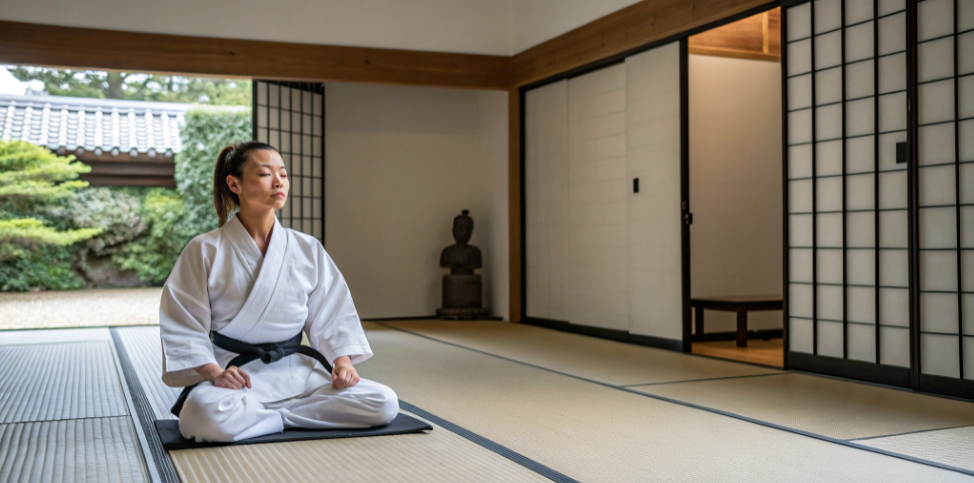
The physical transformation is visible. The mental and psychological evolution, however, is where the most profound change occurs. Martial arts are a moving meditation, a discipline for the mind.
Discipline and Consistency
Showing up to class when you’re tired, when you’ve had a bad day, when you’d rather be on the couch—this is the practice of discipline. There are no shortcuts. A technique is mastered through countless repetitions. A belt is earned through months or years of consistent effort. This cultivates a growth mindset. You learn that excellence is not an event, but a habit. This discipline inevitably spills over into other areas of life: your career, your relationships, your personal projects.
Resilience and Overcoming Adversity
In martial arts, you will fail. You will be tapped out. You will be struck. You will be taken down. You will have days where you feel like you’ve regressed. This is not a bug; it’s a feature. The art teaches you how to lose, how to fail, and how to get back up—literally and figuratively.
You learn that discomfort is not danger, and that struggle is the precursor to growth. This builds a resilience that makes the problems and setbacks of everyday life feel manageable. A difficult conversation at work, a financial hurdle, a personal disappointment—these are put into perspective when you’ve spent the evening battling through fatigue on the mats.
Humility and Ego Management
The training hall is a great ego-eroder. No matter how good you are, there is always someone better, faster, or more knowledgeable. You are constantly reminded that you have more to learn. This fosters a deep and genuine humility. You learn to check your ego at the door, to be a good training partner, and to find joy in the success of others. This humility makes you a better student, a better teacher, and a better human being.
The Meditative State
When you are sparring or drilling a complex technique, there is no room in your mind for the anxieties of the day. You cannot be worrying about a work deadline or a personal conflict while simultaneously defending a chokehold. This state of intense, single-pointed focus is a form of active meditation. It clears the mental clutter, reduces stress, and provides a profound sense of mental clarity and calm that can last for hours after you leave the gym.
Part 6: The Community – You Are Not Training Alone
The journey of the 5% is not a solitary one. Within the walls of a good martial arts school, you find a community, a sangha, a tribe. These are people from all walks of life—doctors, students, construction workers, artists—united by a common pursuit of self-improvement.
This community provides:
- Accountability: People notice when you’re not in class. They encourage you to come back.
- Support: You celebrate each other’s promotions, you help each other with techniques, you build genuine friendships.
- Shared Values: You are surrounded by people who value discipline, respect, and perseverance. This positive peer pressure is a powerful force for good.
In an increasingly disconnected world, this sense of authentic community is a rare and precious commodity.
Conclusion: The Choice to Be Exceptional
The statistic is clear: 95% of the world will never know what it is to have this level of control over their personal safety, their physical health, and their mental state. They will rely on luck, on the hope that violence never finds them, and on a healthcare system to patch up the ailments of a sedentary life.
The 5% have chosen a different path. They have decided to be exceptional. They have recognized that the responsibility for their safety and their well-being rests squarely on their own shoulders. They have found a practice that is at once a shield, a sword, a gym, a therapist’s couch, and a community center.
They have found a way to not just navigate the modern world, but to thrive within it, unafraid.
The rising rates of violence and the decline of public health are not just news stories; they are a call to action. It is a call to stop being a passive spectator in your own life. It is a call to invest in the one asset that will never depreciate: yourself.
The door to the 5% is open. The journey of a thousand miles begins with a single step onto the mats.
Your Journey Starts Here: Contact Urban Edge Martial Arts
Ready to move from reading to action? Your path to becoming part of the prepared 5% starts now.
At Urban Edge Martial Arts, we cut through the noise with a direct, effective approach to self-defense and fitness. Our focus is on two powerful, real-world disciplines:
- Kempo Karate: Master powerful, practical strikes and defenses against common attacks.
- Petiki Tirsia Kali: Develop lightning-fast reflexes and learn the critical skills of weapon-based defense and empty-hand flow.
This unique combination creates a complete self-defense system, forging confidence, formidable skill, and peak physical condition.
Stop hoping you’ll never need it. Start knowing you can handle it.
Take the first step. Contact Urban Edge Martial Arts today for your FREE introductory lesson.
Source: Urban Edge Martial Arts
 Best Martial Arts Classes In North York