
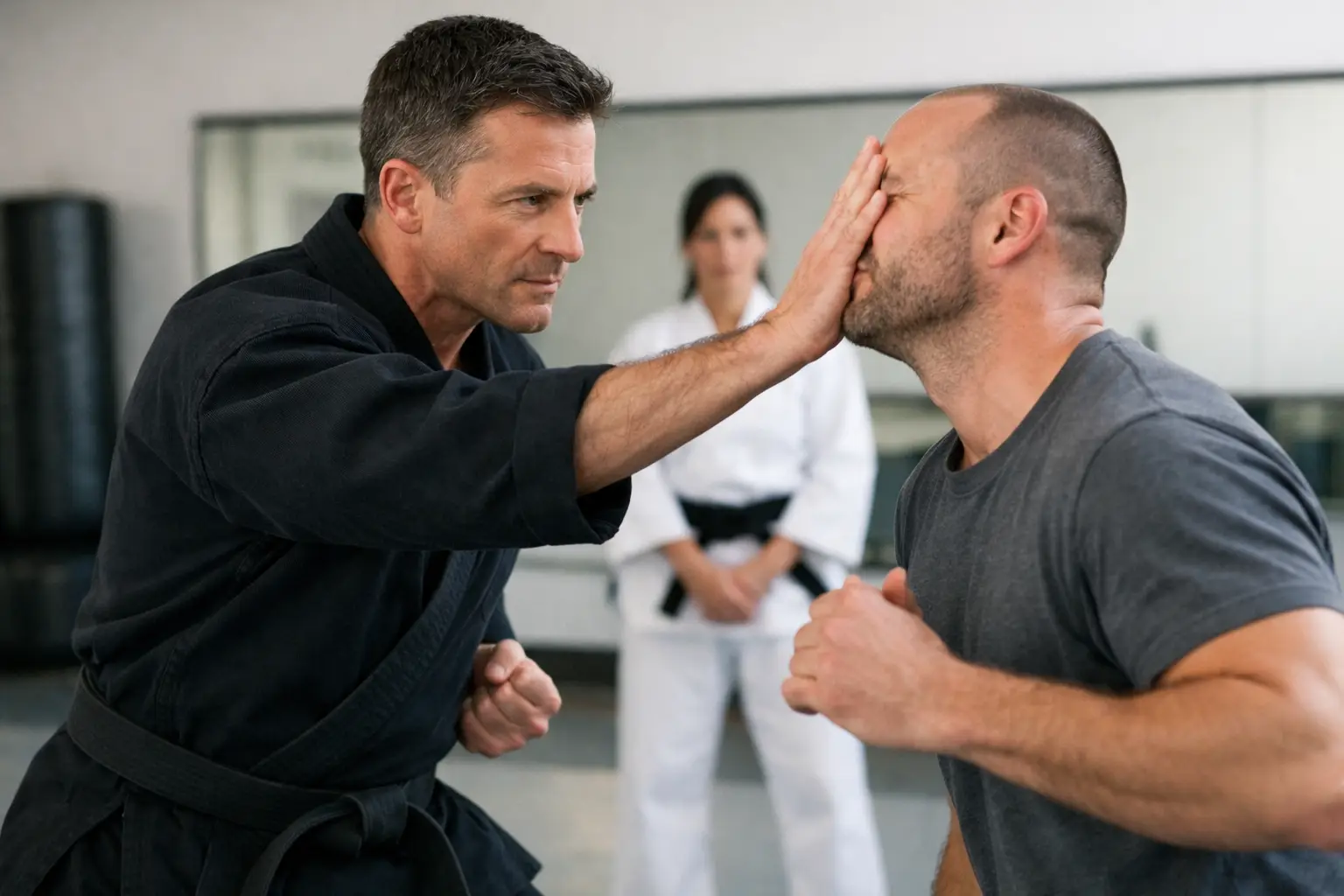
A lot of beginners walk into their first class thinking martial arts starts with flashy combinations or high kicks. It doesn’t. Kenpo karate basics start with something far more useful – learning how to stand, move, hit with control, and stay composed under pressure.
That matters if your goal is real self-defense, not just memorizing techniques. Good training gives you structure, confidence, and a clear path forward. Whether you’re an adult looking for practical skills, a parent exploring training for your child, or someone who simply wants to feel stronger and more prepared, the basics are where real progress begins.
What Kenpo Karate Is Built For
Kenpo karate is known for fast, efficient striking, coordinated footwork, and practical defensive responses. At its best, it teaches students how to react quickly, create openings, and use simple tools under stress. Instead of relying on size or strength alone, it builds timing, precision, and body mechanics.
That said, not every school teaches it the same way. Some programs lean more traditional and focus heavily on forms, memorization, and rank progression. Others put more attention on application, partner drills, and realistic self-protection. Neither approach is automatically wrong, but the right fit depends on your goal. If you want confidence for real-world situations, the training should eventually connect the basics to pressure, movement, and decision-making.
The Core Kenpo Karate Basics Every Beginner Should Learn
Beginners do not need a huge toolbox. They need a small set of skills they can repeat well.
Stance and balance
A solid stance gives you the base for everything else. If your feet are out of position, your punches lose power, your defense gets sloppy, and your movement falls apart. Good stance training teaches stability without making you feel stuck to the floor.
In practical terms, you want balance that lets you strike, defend, and move in any direction. A beginner often stands too tall, too narrow, or too rigid. The fix is simple but not always easy – bend the knees slightly, keep the posture upright, and stay ready to shift your weight without crossing your feet or leaning too far.
Guard position
Your guard protects your head and centerline while keeping you ready to strike. This is one of the first habits that separates trained movement from untrained movement. A lot of beginners drop their hands after every punch or let their elbows flare wide. Under pressure, that creates openings fast.
A good guard is active, not frozen. Your hands stay up, your chin stays protected, and your arms are in a position to block, check, or counter. It should feel natural enough that you can maintain it while moving.
Footwork
Footwork is one of the most overlooked parts of beginner training, and one of the most important. In self-defense, being able to angle off, step back, or close distance at the right moment can matter more than knowing ten extra hand techniques.
Kenpo karate basics include learning how to move without losing posture or balance. That means short, controlled steps, clean directional changes, and the ability to stay set for offense or defense. Big, dramatic movement may look good in demonstration, but compact movement usually works better when space is tight.
Basic strikes
Straight punches, palm strikes, hammerfists, elbows, and low kicks are common foundational tools. The point is not to collect techniques. The point is to understand how your hips, shoulders, and feet work together so the strike has speed, structure, and purpose.
For beginners, clean mechanics matter more than power. If the structure is right, power develops over time. If the structure is wrong, you end up muscling everything and wearing yourself out. A strong beginner program teaches how to hit accurately, recover quickly, and stay protected during the exchange.
Blocks and defensive reactions
Defense in Kenpo is not just about stopping an attack. It is about covering vulnerable targets, disrupting the opponent’s momentum, and putting yourself in position to respond. Beginners usually start with simple inward blocks, outward blocks, parries, and checks.
The trade-off is that defensive movements practiced in the air can look cleaner than they feel against a live partner. That is why basics should progress beyond solo repetition. Students need controlled partner work to understand timing, distance, and the fact that no defense works perfectly every time.
Why Basics Matter More Than Fancy Techniques
A beginner can learn a long sequence and still freeze under pressure. On the other hand, someone with strong fundamentals can often respond faster because their reactions are simpler and more reliable.
That is the real value of the basics. They give you usable options when adrenaline kicks in. They also reduce wasted motion, which matters in both sparring and self-defense. You do not need a complicated answer to every problem. You need a few dependable skills you can apply from different positions and ranges.
This is also where confidence starts to become real. Not false confidence from collecting belts or memorizing names, but earned confidence from repetition, feedback, and controlled testing.
Kenpo Karate Basics and Real-World Self-Defense
There is a difference between learning martial arts and learning how to protect yourself. Good self-defense training includes awareness, verbal boundaries, positioning, escape opportunities, and understanding when force is appropriate. Physical skills matter, but they are only part of the picture.
That is why kenpo karate basics should be taught in context. A punch is not just a punch. When do you use it? From what range? What if the attacker is aggressive, larger, or moving in fast? What if there is more than one person? What if your first response misses?
Those questions are what make training practical. At Urban Edge Martial Arts, that real-world mindset is what turns fundamentals into something more than a workout. Students still build discipline and technique, but they do it with an eye toward realistic pressure and personal protection.
What Beginners Usually Get Wrong
Most mistakes are predictable, which is actually good news. It means they can be fixed with consistent coaching.
One common issue is trying to go too hard too early. Beginners often confuse speed and tension with effectiveness. The result is sloppy mechanics and fast fatigue. Relaxed technique, good alignment, and timing will take you further than forcing every movement.
Another issue is focusing only on the hands. People like punches because they feel direct, but posture, hips, stance, and footwork are what make those punches work. If the lower body is unstable, the upper body usually shows it.
A third mistake is treating basics as boring. They are not boring when taught properly. They are the part of training that makes everything else possible. The students who improve fastest are usually the ones willing to repeat simple skills until they become sharp.
How to Train the Basics the Right Way
Consistency beats intensity for most beginners. Two or three quality sessions a week will usually produce better results than one all-out session followed by long gaps. Skill development depends on repetition, but it also depends on recovery and coaching.
Start by paying attention to position before speed. Make sure your stance is balanced, your guard stays up, and your strikes return cleanly. Then build rhythm. Then add pressure. That order matters. If you rush to advanced drills without owning the foundation, bad habits stick.
Partner work should also increase gradually. Light contact drills help you understand distance and timing without creating panic. Over time, controlled resistance helps students adapt when a technique does not go exactly as planned. That is where confidence gets tested and improved.
For kids and teens, the same principles apply, but the emphasis may shift. Strong beginner training should build coordination, focus, self-control, and confidence alongside technique. For adults, practical application and stress management often matter more. The basics are the same. The coaching approach should fit the student.
What Progress Actually Looks Like
Progress in martial arts is not always dramatic. At first, it may look like better posture, cleaner movement, and fewer mistakes. Then it becomes quicker reactions, stronger conditioning, and more composure under pressure. Later, it shows up as judgment – knowing when to move, when to disengage, and when to respond decisively.
That is worth remembering if you are just starting out. You do not need to feel advanced to be improving. If your stance is stronger this month than it was last month, if your guard stays up longer, if your movement feels more controlled, you are building something useful.
Kenpo karate basics are not a beginner phase you rush through. They are the foundation you keep refining as your training gets harder and more realistic. Stay with them. The payoff is not just better technique. It is the ability to move with more confidence, think more clearly under stress, and carry yourself differently long before you ever need to defend yourself.
The best time to take the basics seriously is day one, because solid fundamentals have a way of showing up when it counts most.