
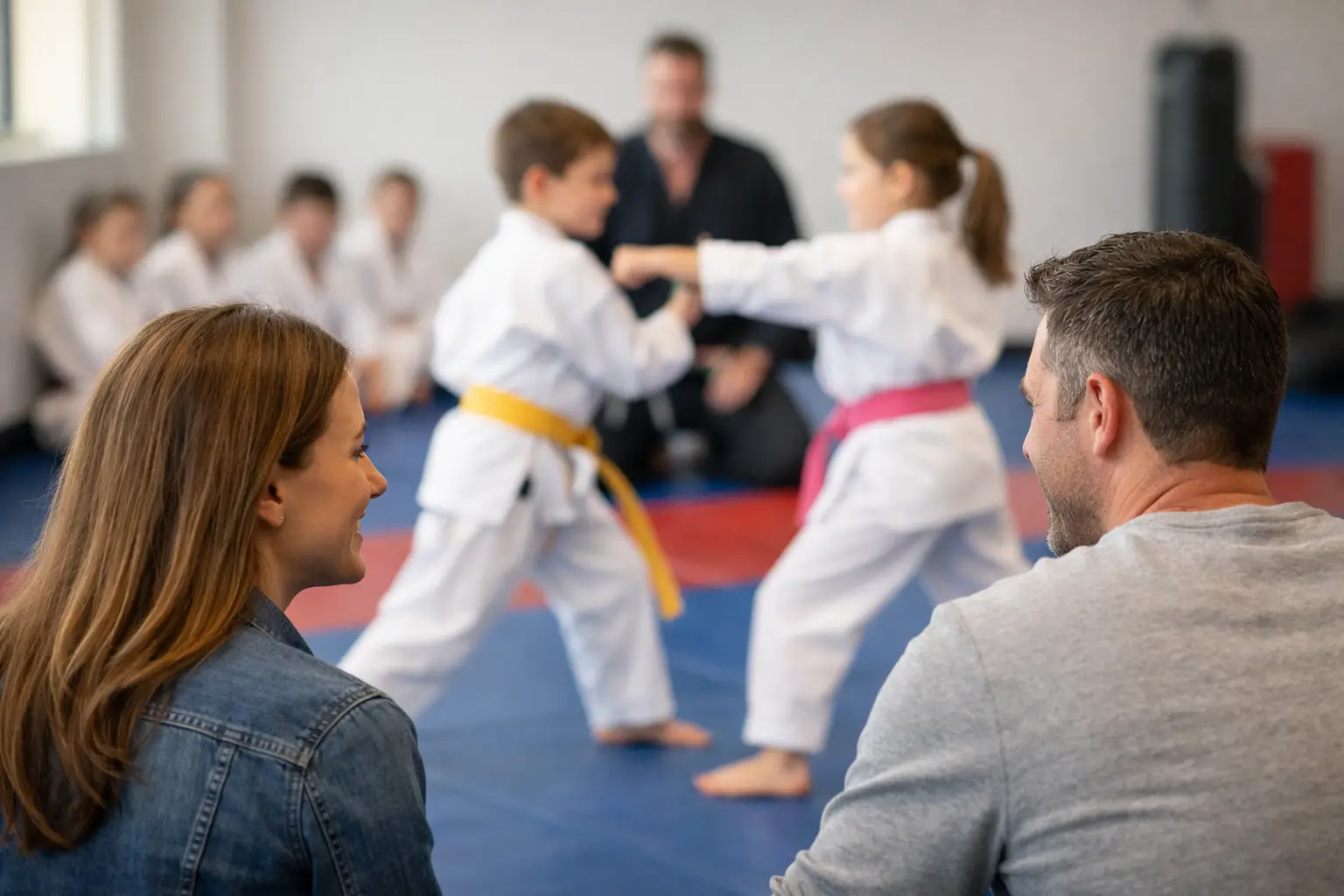
The first class tells you a lot. Not from the logo on the wall or the color of the mats, but from what the coach allows, corrects, and expects. If you are looking for a parents guide to choosing kids martial arts, start there. The right program should feel structured, safe, and purposeful from minute one.
Many parents begin with the same question: which martial art is best for my child? The honest answer is that it depends less on the style name and more on how the school teaches it. A great instructor can make a beginner feel capable without lowering standards. A weak program can hide behind belts, trophies, or flashy drills while missing the bigger goal – helping kids become more confident, more disciplined, and better prepared for pressure.
What parents should really look for in kids martial arts
Most families are not just shopping for an after-school activity. They want something that builds focus, confidence, fitness, and resilience. They also want to know their child is learning skills that have value outside the classroom.
That is why a parents guide to choosing kids martial arts should focus on outcomes, not marketing. Ask yourself what you want your child to gain in six months. Better listening. Stronger posture. More control under stress. Healthier confidence. If a school cannot explain how its classes develop those traits, keep looking.
A good program gives kids clear structure. There is a warm-up with purpose, technical instruction that matches the child’s age, controlled partner work, and coaching that reinforces respect and discipline. The class should not feel chaotic. It also should not feel soft. Kids usually respond best when expectations are clear and consistent.
Style matters, but teaching matters more
Parents often compare karate, taekwondo, jiu-jitsu, kickboxing, or mixed martial arts as if one label answers everything. Each can be useful. Each can also be a poor fit depending on the child, instructor, and training environment.
Traditional striking arts often help with discipline, balance, body control, and structured progression. Grappling-based programs can teach problem-solving, composure, and how to manage physical pressure. Self-defense-focused schools may put more attention on awareness, distance, boundary setting, and realistic responses.
The trade-off is simple. Some schools are great at sport development but do less with real-world self-protection. Others are highly practical but may be less focused on tournaments or performance. Neither approach is automatically wrong. It depends on your family’s priorities.
If your child needs confidence, focus, and practical personal safety skills, a self-defense-centered program may be the better match than a sport-only school. If your child is highly competitive and thrives on tournaments, a competition-focused program may be a better fit. The key is choosing on purpose, not assuming every martial arts program teaches the same thing.
Safety is not just about pads and rules
Parents understandably look for clean mats, organized classes, and age-appropriate contact. Those things matter. But real safety runs deeper.
Watch how instructors manage behavior. Do they correct roughness immediately? Do they pair students responsibly? Do they keep beginners from getting overwhelmed? A safe school is not one that removes every challenge. It is one that introduces challenge with control.
You should also pay attention to whether the school teaches awareness and judgment, not just techniques. Children do not need fear-based training. They do need to learn when to create space, when to use their voice, when to get help, and how to stay calm under pressure. That kind of training builds safer habits than memorizing moves alone.
The instructor can make or break the experience
A polished website does not tell you how an instructor handles nervous beginners, distracted kids, or confident students who need humility. That only shows up on the floor.
Look for coaches who are firm, clear, and encouraging. Kids need correction, but they also need progress they can feel. The best instructors know how to challenge without discouraging. They teach discipline without turning class into punishment.
You should hear specific coaching, not just generic praise. “Hands up.” “Strong stance.” “Look at your partner.” “Reset and try again.” Clear instruction builds skill and trust. If everything is “awesome” regardless of effort or execution, the class may be more babysitting than development.
At Urban Edge Martial Arts, this balance matters. Families who want serious training for real confidence need instructors who can hold standards while keeping kids supported and engaged.
Watch for structure, not just energy
A high-energy class can look impressive from the sidelines. Kids are moving, shouting, and sweating. That does not automatically mean they are learning well.
Good classes have a clear progression. Younger children should work on basics such as stance, balance, coordination, listening, and respectful partner habits. As they mature, training can expand into timing, controlled contact, scenario work, and more advanced self-defense concepts. The curriculum should grow with the student.
Ask how advancement works. Are promotions based on attendance alone, or do students need to demonstrate skill, focus, and maturity? Belt systems can be helpful when they reflect real progress. They become a problem when they are mainly used to keep parents happy.
Practical self-defense vs. performance martial arts
This is one of the biggest decision points for parents. Some programs emphasize forms, point sparring, and tournaments. Others emphasize realistic self-protection, including awareness, verbal boundaries, movement under pressure, and defense against common threats.
For many families, practical training has stronger long-term value. Kids learn how to stay composed, protect personal space, and respond with control. That does not mean every class needs to be intense or grim. It means the training has a clear connection to real life.
A child who learns to manage pressure in a controlled environment often gains confidence at school, in social situations, and in unfamiliar settings. That confidence tends to look quieter and stronger than performance confidence. It is less about showing off and more about carrying themselves differently.
Your child’s personality matters
There is no single best martial art for every child. A shy child may benefit from a program that steadily builds assertiveness and voice. A high-energy child may need firm structure and repetition. A child who quits easily may need an instructor who knows how to create small wins without lowering the bar.
This is why trial classes matter. Do not only ask whether your child liked it. Ask why. Sometimes a child loves a class because it is fun and well run. Sometimes they love it because nothing is expected of them. On the other side, some kids feel challenged and unsure at first, then grow quickly once they settle in.
Parents should look for a healthy middle ground. The class should be engaging enough that your child wants to return, but demanding enough that growth is required.
Questions worth asking before you enroll
You do not need to interrogate the staff, but you should ask direct questions. What does the program focus on most: sport, tradition, fitness, or self-defense? How do instructors handle new students? How is contact introduced? What are the expectations for behavior and advancement? What should parents expect their child to gain in the first three months?
Strong schools answer clearly. Weak schools get vague or overpromise. Be cautious of programs that guarantee dramatic transformation, instant confidence, or rapid rank progression. Real development takes time, consistency, and good coaching.
Signs you found the right fit
The right school usually feels clear before it feels flashy. Coaches are in control. Kids know what is expected. The atmosphere is respectful, not stiff. Training is challenging, but not reckless. Parents can see a path from beginner basics to meaningful progress.
Most of all, your child starts changing in ways that carry beyond class. They stand taller. They listen faster. They recover better when things get hard. They become more capable without becoming arrogant. That is the kind of martial arts training worth investing in.
Choosing a school is really choosing an environment. Pick one that teaches your child how to handle pressure, respect others, and trust their own ability. Those lessons stay useful long after the uniform comes off.