
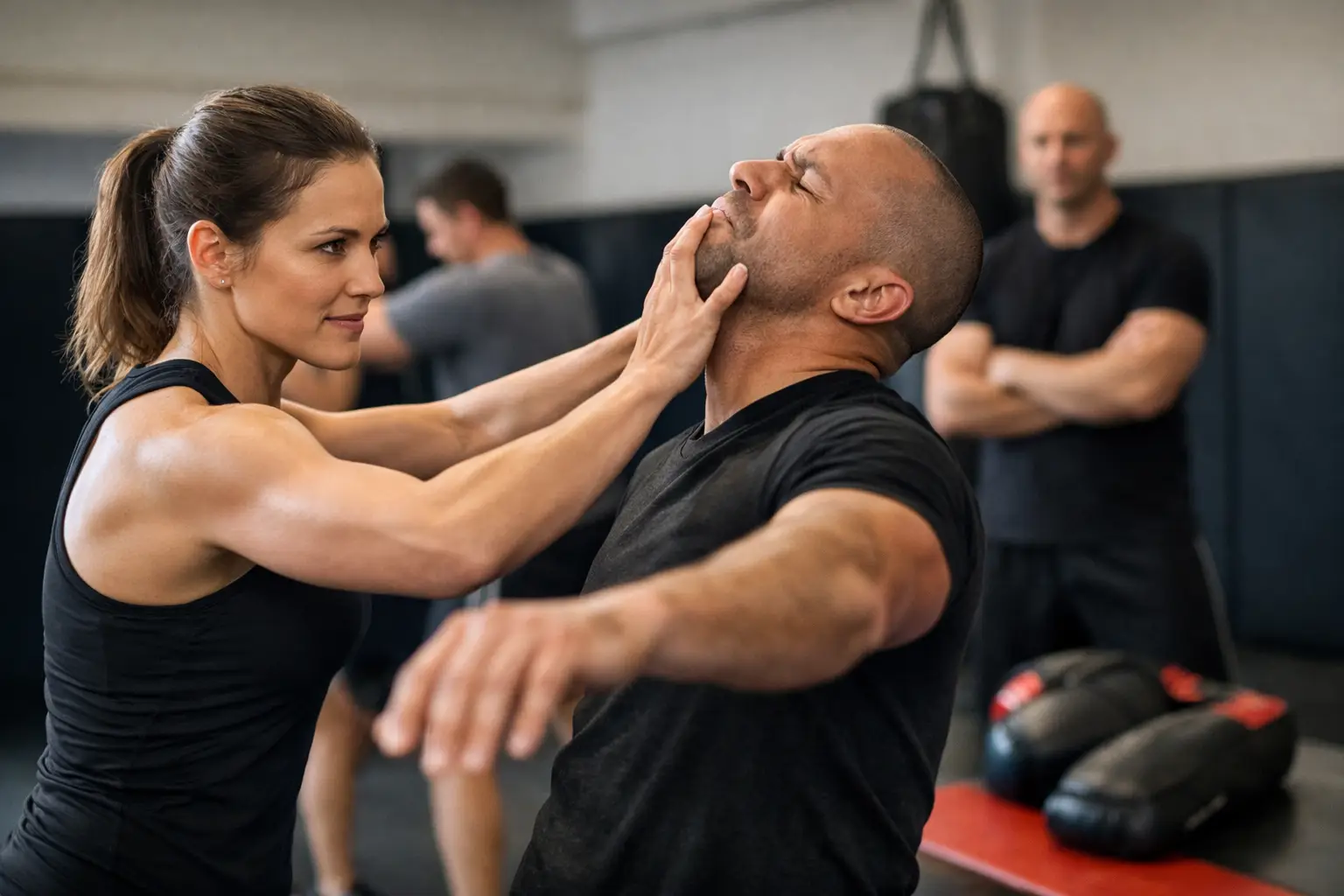
A crowded parking lot, an aggressive stranger, a tense encounter on public transit – most adults do not need more reasons to be afraid. They need a clear plan for what to do when space closes, adrenaline hits, and there is no time to think through options. Real adult self defense training results are not measured by flashy moves. They show up in awareness, decision-making, physical readiness, and the ability to act with purpose under pressure.
At Urban Edge Martial Arts, the goal is not to turn everyday people into fighters. It is to help them become harder to intimidate, harder to control, and better prepared to protect themselves and the people around them. That takes structured training, honest feedback, and techniques built for reality rather than a points match.
What Adult Self Defense Training Results Really Look Like
The first result is often mental. Adults begin noticing exits, distance, body language, and changes in their surroundings without becoming paranoid. They learn that prevention is a self-defense skill. Crossing the street, setting a firm boundary, leaving early, or creating space can be the smartest response to a potential threat.
The next result is physical confidence. This does not mean believing you can win every confrontation. It means knowing how to stand with balance, move with intent, protect your head, manage distance, and get away when an encounter becomes physical. Confidence built through repetition is quieter and more useful than false bravado.
Students also gain a more realistic understanding of violence. Real encounters are fast, uneven, and stressful. They may involve an attacker who is larger, multiple people, a wall or vehicle behind you, or a weapon. Effective training acknowledges those factors. It teaches students to make practical choices, use simple responses, and prioritize escape when escape is available.
Fitness improves along the way. Drilling footwork, strikes, clinch movement, defensive positioning, and scenario work develops coordination, stamina, mobility, and functional strength. For busy adults, that can make training more sustainable than a workout routine with no clear purpose. You are not simply moving more. You are building a body that responds better when you need it.
Results Depend on What You Train For
Not every martial arts class is designed to produce the same outcome. A sport-focused program can build timing, discipline, athleticism, and competitive skill. Traditional training can offer valuable structure, history, and technical depth. Those are legitimate goals.
But adults looking for personal protection need training that addresses the circumstances they are more likely to face. That includes close-range contact, common grabs, pressure from an uncooperative partner, awkward angles, confined spaces, and the possibility of knives or impact weapons. It also includes the judgment to understand when physical action is necessary and when creating distance is the better choice.
A practical curriculum should not rely on complicated sequences that disappear once stress rises. The strongest tools are usually direct, repeatable, and supported by sound positioning. A student must be able to use them while tired, surprised, and dealing with resistance.
That is why pressure matters. A technique can look clean when a partner stands still and cooperates. It becomes meaningful when students learn to apply it with movement, timing, controlled resistance, and decision-making. Training should be safe, but it should not be pretend.
Armed and Empty-Hand Skills Work Together
Empty-hand self-defense remains essential because many threats begin at conversational distance. You may need to break contact, protect your balance, strike only long enough to create an exit, or defend yourself in a tight space. These skills should work for beginners, not just naturally athletic people.
Weapon awareness adds another layer of readiness. Pekiti Tirsia Kali training develops coordination, range awareness, angle recognition, and an understanding of how edged and impact weapons change an encounter. The purpose is not to encourage people to seek weapon confrontations. It is to help them recognize danger sooner and respond with better judgment when avoidance is no longer possible.
Okinawan Kempo complements that training with practical striking, defensive movement, control, and close-range responses. Together, armed and empty-hand training help adults avoid the common mistake of treating every threat as if it will happen at kickboxing range with one willing opponent.
How Long Does It Take to See Results?
Most beginners feel a difference after their first few classes. They stand differently, move with more intention, and realize that self-defense is a learnable skill rather than something reserved for naturally tough people. That early shift matters, especially for adults who have spent years feeling unprepared.
Within the first month or two of consistent training, many students notice better conditioning, sharper coordination, and greater comfort working with a partner. They begin recognizing the logic behind distance, posture, and positioning. Simple defensive movements become less foreign because they have been repeated enough to feel familiar.
More durable results take longer. Calm execution under stress comes from regular practice over months and years, not a single seminar. The same is true of physical conditioning, timing, and the ability to make good decisions when a situation changes quickly. There is no honest shortcut around repetition.
Frequency matters, but consistency matters more. Training once a week with focus can build progress. Training two or three times weekly usually accelerates it. A demanding work schedule, recovery needs, and prior fitness level all affect the pace. The right plan is one you can maintain, not an extreme routine that ends after three weeks.
How to Measure Your Self-Defense Progress
Belts, grades, and completed classes can mark progress, but they are not the whole picture. Better questions are more practical. Can you maintain balance when someone pushes or pulls you? Can you move off line instead of freezing? Can you protect yourself while finding a path out? Can you use a clear voice and set a boundary before a situation turns physical?
Progress also appears in how you handle training pressure. Early on, students may hesitate, overthink, or hold their breath during drills. With coaching and repetition, they learn to stay present, keep moving, and make decisions. That ability to function while uncomfortable carries into work, parenting, travel, and daily life.
Another meaningful result is restraint. Good self-defense training does not make people eager to prove themselves. It gives them more options. A trained adult is more likely to spot trouble early, de-escalate when possible, and use only the level of force needed to create safety.
What Gets in the Way of Real Progress
The biggest obstacle is often expecting immediate certainty. Training can make you more capable, but it cannot guarantee a particular outcome in every dangerous situation. Size, surprise, weapons, numbers, environment, and luck all matter. Anyone promising complete invincibility is selling fantasy.
Inconsistent attendance slows development, as does treating class like a performance instead of a learning process. Adults improve faster when they are willing to be beginners, ask questions, drill the fundamentals, and accept correction. A supportive training community makes that easier. Serious training does not require a hostile environment.
Choosing a program based only on intensity can also backfire. You need enough pressure to test your skills, but you also need qualified instruction, controlled training partners, and a progression that lets your body adapt. The goal is to build capable students who can keep training, not collect injuries.
The Result That Lasts Beyond the Mat
The strongest outcome is not a list of techniques. It is self-trust. You know you can stay composed when things feel uncomfortable, keep working when you are tired, and make better decisions when pressure rises. That changes how you carry yourself long before you ever need a physical skill.
Start where you are. You do not need a martial arts background, perfect fitness, or a fighter’s mindset to train smart and defend better. You need the willingness to show up, learn the fundamentals, and build confidence one disciplined class at a time.