
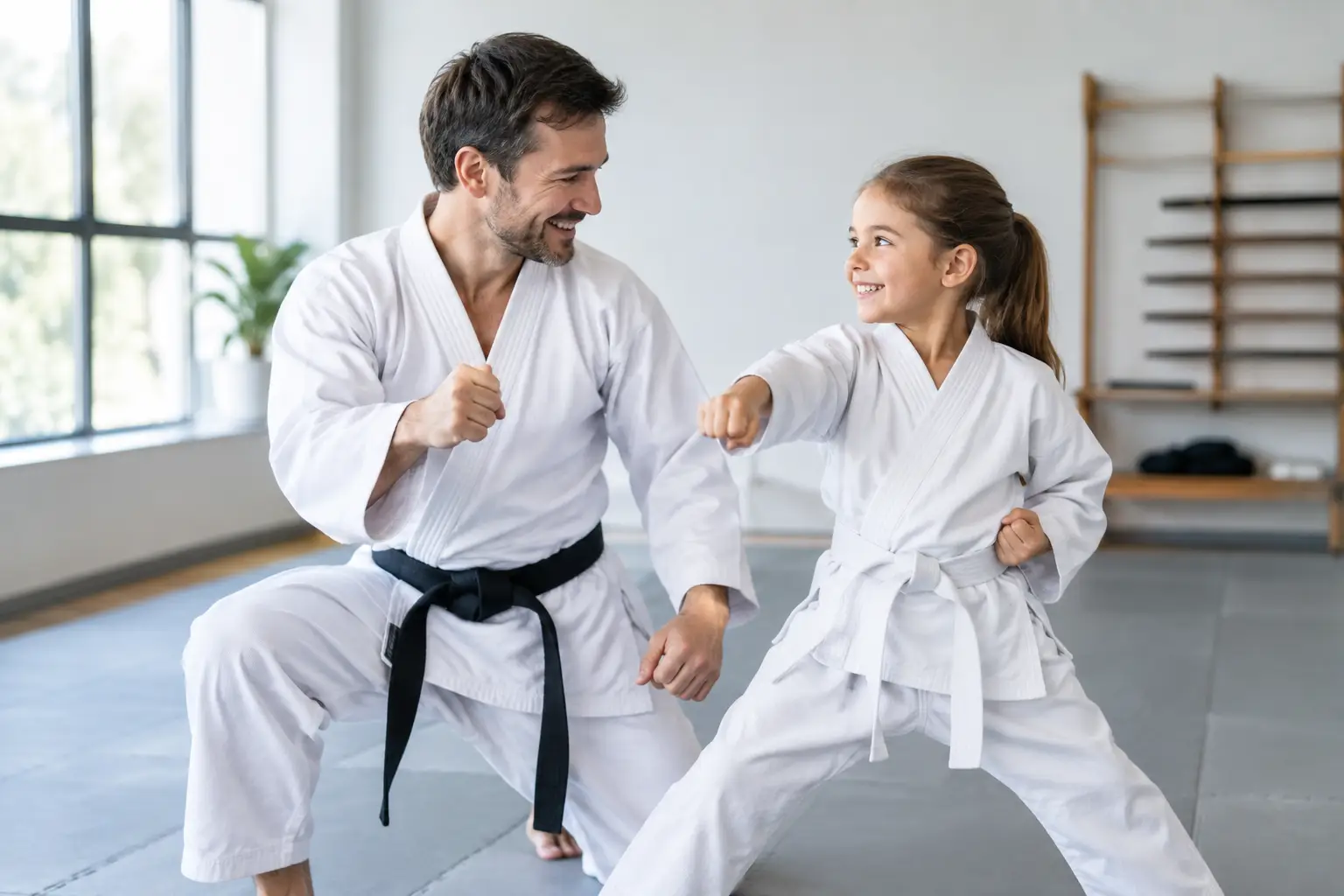
A shared martial arts class changes the usual parent-child dynamic. Instead of one person giving directions and the other being told what to do, both people show up, practice, make mistakes, and improve. That is why the best martial arts for parent child bonding are not simply the styles with the flashiest techniques. They are the programs that create meaningful training time, build real competence, and give families a challenge they can face together.
For families, the right martial arts school can become more than an after-school activity. It can be a consistent space for focus, accountability, confidence, and honest encouragement. The key is choosing training that fits your child’s age, your goals, and the kind of connection you want to build.
What Makes Martial Arts Good for Family Bonding?
Bonding does not come from putting on matching uniforms. It comes from shared effort. When a parent and child learn a stance, repeat a drill, or work through a difficult skill together, they see each other differently. A child sees that their parent is willing to learn. A parent gets to recognize their child’s persistence, courage, and progress firsthand.
Martial arts also give families a healthy structure for spending time together. Phones are away. The goal is clear. Students have to listen, move with control, respect boundaries, and stay present. For busy families, that focused hour can matter more than several distracted hours at home.
The best programs balance challenge with safety. Children need instruction that is age-appropriate, positive, and carefully supervised. Parents need training that feels worthwhile rather than watered down. A school that can meet both needs creates a stronger long-term experience than a program built only for entertainment or only for adult fighters.
The Best Martial Arts for Parent Child Bonding
There is no single style that works for every family. A confident 12-year-old, a cautious 6-year-old, and a parent returning to fitness after years away will not need the same experience. Still, several martial arts approaches stand out because they encourage partner work, discipline, and practical growth.
Kempo Karate: Structure, Confidence, and Practical Skill
Kempo Karate is a strong choice for parents and children who want clear progression. Students learn how to stand, move, strike, block, and respond under pressure. Classes typically give children the structure they need while allowing adults to develop fitness, coordination, and self-protection skills that have real value outside the training floor.
For bonding, Kempo works because progress is visible. A child may work hard to improve balance or remember a sequence, while a parent develops better timing and control. Both can celebrate milestones without competing against each other. The parent’s role becomes supportive, not critical.
A practical Kempo program is especially valuable when it teaches awareness, boundaries, and responsible self-defense alongside physical technique. Families should look for instruction that explains why a technique works, when it should be used, and when the smartest response is to create distance and get help.
Kali: Communication Through Partner Drills
Kali is known for its weapon-based training, but its deeper value is movement, awareness, timing, and coordination. Age-appropriate Kali classes often use safe training tools and controlled partner drills to teach students how to manage distance, recognize lines of attack, and move with purpose.
This can be excellent for parent-child bonding because the drills require cooperation. One person feeds a pattern while the other responds. Both partners must pay attention. The child learns that control matters. The parent learns to slow down, communicate clearly, and let the child develop at their own pace.
Kali is not the right fit if a school treats weapons as a novelty or pushes advanced material too early. The training must be disciplined, supervised, and adjusted for a child’s maturity level. Done well, it builds focus without glorifying violence. It teaches students to respect danger and make safer decisions.
Brazilian Jiu-Jitsu: Trust and Problem-Solving
Brazilian Jiu-Jitsu can be a good option for families who enjoy close-range grappling and hands-on problem-solving. Students learn leverage, escapes, position, and control. It can help smaller students understand that calm technique can matter more than brute strength.
The bonding benefit comes from trust. Parents and children have to work safely with training partners, communicate about comfort levels, and learn to stay calm when a position feels difficult. For some children, especially those who dislike striking, this can be a more approachable entry point into martial arts.
There are trade-offs. Grappling involves close contact and can feel uncomfortable for some students. Parents should make sure classes maintain strong hygiene practices, clear safety rules, and careful supervision. A child should never be pressured to train through fear, pain, or an injury.
Taekwondo: Energy, Goals, and Positive Routine
Taekwondo is often a natural fit for younger children and families who want a traditional class format with plenty of movement. Kicking drills, forms, belt goals, and group structure can give energetic kids a productive outlet. Parents who enjoy measurable milestones may also appreciate the steady progression.
Its biggest bonding strength is routine. Practicing a form in the living room, preparing for a belt test, or encouraging each other before class can become a positive family ritual. It can build patience in parents and persistence in children.
The question is whether the school teaches more than performance. Some Taekwondo programs focus heavily on tournaments, forms, or high kicks. Those elements can be valuable, but families seeking practical personal protection should ask how the school teaches awareness, distance management, and simple self-defense under realistic pressure.
Choose the School, Not Just the Style
A great style taught poorly will not create a great family experience. The instructor, class culture, and curriculum matter just as much as the name on the sign. Before enrolling, watch how instructors correct children. Are they firm without being harsh? Do they expect discipline while recognizing effort? Do parents receive clear answers about safety, progression, and class expectations?
Look for a program that gets these fundamentals right:
- Age-appropriate instruction that challenges children without overwhelming them.
- Clear safety standards for contact, equipment, partner work, and supervision.
- A curriculum with useful skills, not just memorized routines or belt promotions.
- A welcoming class culture where beginners can learn without embarrassment.
Ask whether parents can train alongside their children, train during a parallel class, or participate in family sessions. Not every family needs to be in the exact same class to benefit. Sometimes a young child needs a kids-only environment, while a parent trains in an adult program at the same facility. What matters is that martial arts becomes a shared commitment rather than one more item on a child’s schedule.
How to Make Training Time Strengthen the Relationship
The class is only part of the experience. What happens before and after training often creates the strongest connection. Keep the conversation simple. Ask your child what felt hard, what they improved, or what they want to practice next time. Avoid turning every ride home into a performance review.
At home, focus on short, low-pressure practice. Spend five minutes reviewing footwork, balance, or a basic movement. Let your child teach you something from class. When a child explains a skill to a parent, they build confidence and retain the lesson more deeply.
It also helps to model the behavior you want them to develop. If you forget a sequence, laugh, reset, and try again. If a drill is tiring, finish with good effort. Children pay close attention to how adults respond to frustration. Your example can teach resilience more effectively than a speech ever will.
Avoid making martial arts another source of pressure. Some children will love testing for rank. Others may need more time. Some parents will progress quickly because of strength or experience, while others will need to build mobility and conditioning first. Keep the goal centered on consistency, safety, and growth, not who earns the next belt first.
Train for More Than a Shared Activity
The strongest family martial arts programs give parents and children something useful to carry into everyday life. Better posture. More confidence. Greater self-control. The ability to recognize trouble early and respond with sound judgment. Those lessons matter at school, at work, on public transit, and in unfamiliar situations.
At Urban Edge Martial Arts, families can train in a structured environment that combines practical Kempo Karate and Pekiti Tirsia Kali with a clear focus on real-world readiness, confidence, and disciplined progress. The goal is not to create fear. It is to help students become harder to intimidate and better prepared to make smart decisions.
The right class will not make every parent and child identical. It gives each person room to grow while building a habit of showing up for one another. Start with a school where your family feels challenged, respected, and safe, then let the small wins add up.