
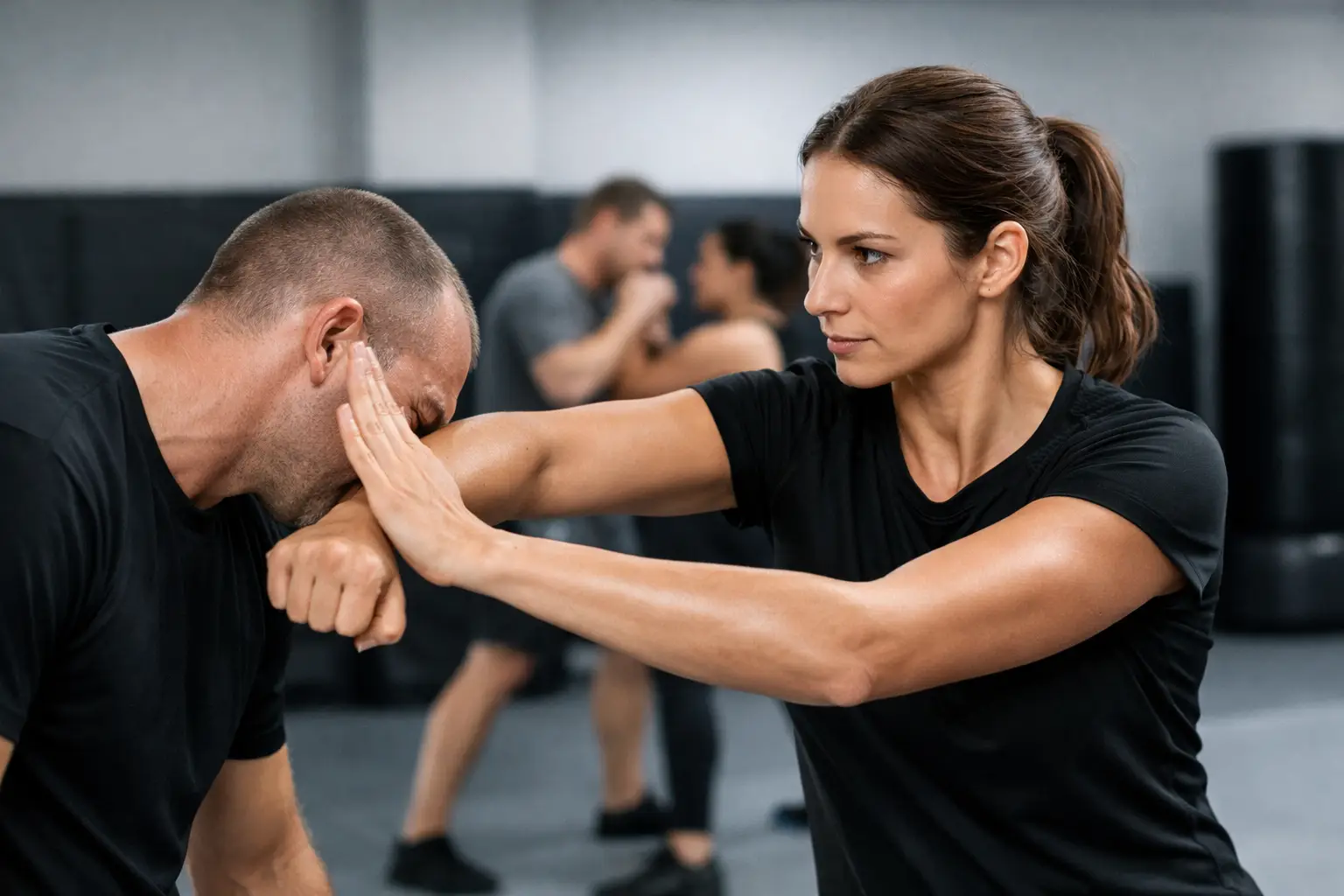
Most people do not worry about self-defense until they realize they have no clear answer to a simple question: what would I actually do if someone grabbed me, cornered me, or came at me with a weapon? That is where practical self defense classes matter. They are not built around trophies, flashy moves, or memorizing routines for the sake of tradition. They are built around real problems, realistic pressure, and skills you can use when adrenaline hits.
For adults, teens, and families, that difference matters more than marketing language. A practical program should help you move better, think faster, and respond under stress. It should also make you stronger, more aware, and more confident without pretending every situation has a perfect answer.
What makes self-defense training practical?
Practical training starts with context. Real violence is messy, fast, and unpredictable. It may involve close-range aggression, verbal intimidation, surprise attacks, confined spaces, or weapons. That means the training has to prepare students for pressure, not just for cooperation.
In practical self defense classes, techniques are tested against likely scenarios. Students learn how to manage distance, protect their head, maintain balance, escape bad positions, and create openings to get away or shut down an attack. The focus is on high-value skills that hold up when stress spikes and fine motor control starts to break down.
This also means practical training usually looks different from point sparring or highly stylized forms. There is still structure and discipline, but every drill should answer a clear question: how does this help in a real confrontation?
Why sport training alone is not enough
Sport martial arts can build timing, conditioning, and toughness. Those are real benefits. But rules change behavior. If the setting assumes a referee, a padded floor, weight classes, and one unarmed opponent, students can develop habits that do not fit a real assault.
That does not make sport training bad. It just means it has limits. The same is true for overly traditional programs that spend more time on choreography than application. If students never train against grabs, clinches, surprise entries, knife threats, or multiple-attacker pressure, they may feel confident without actually being prepared.
Practical self defense classes close that gap. They train people to deal with uglier, less predictable situations while still building strong fundamentals. The best programs do not reject tradition or athletic training outright. They use what works and strip away what does not.
What you should expect in practical self defense classes
A serious program should feel organized, progressive, and purposeful. Beginners should not be thrown into chaos on day one, but they also should not spend months learning material with no clear real-world use.
Early training often covers stance, movement, striking mechanics, breakfalls, defensive structure, and situational awareness. From there, students should work through common self-protection problems: wrist grabs, pushes, choke attempts, wild punches, clinch pressure, and ground survival. As they develop, the training should expand into scenario work and controlled resistance.
A strong curriculum may also include edged weapon awareness, impact weapon defense concepts, and multiple-attacker strategy. That does not mean promising students they can dominate every violent encounter. It means teaching them how to improve their odds, make fast decisions, and understand when escape is the priority.
That kind of honesty matters. Good self-defense training is not about fantasy. It is about giving people practical tools and a realistic mindset.
Real confidence comes from pressure-tested reps
Confidence is one of the biggest reasons people start training, but real confidence is earned. It does not come from being told you are capable. It comes from doing hard things in a controlled environment until your responses improve.
That is why pressure matters. A student may perform a technique perfectly in a slow demo, then lose it the moment a partner resists. Practical training accounts for that. It builds from cooperative learning into drills with timing, movement, unpredictability, and stress.
The result is different from simple fitness training. You are not just getting tired. You are learning to stay functional when your heart rate rises and someone is forcing a problem on you. That is one reason so many students notice benefits outside the gym. They carry themselves differently, speak more clearly, and panic less under pressure.
Practical training helps more than personal safety
People often come in for self-defense and stay for everything else that improves. Training sharpens fitness in a useful way. You build coordination, balance, mobility, endurance, and strength while learning a skill with direct application.
There is also a mental shift that happens over time. Students become more disciplined and harder to rattle. They gain a better sense of boundaries and a stronger understanding of when to de-escalate, when to disengage, and when they must act decisively.
For teens, this can mean better focus and more self-control. For working adults, it often becomes a productive outlet that cuts through stress. For parents, it offers peace of mind and a more grounded sense of readiness. In a good school, the training is challenging, but the environment is still supportive enough for beginners to stick with it.
The value of weapons awareness and empty-hand skills
One major difference between recreational martial arts and practical self-defense is the willingness to address armed threats. In real assaults, knives and improvised impact weapons are not rare concerns. Ignoring them does not make them less relevant.
That said, weapons training must be taught responsibly. The goal is not to create false confidence or movie-style expectations. It is to help students understand timing, distance, lines of attack, and how quickly a threat can escalate. Even basic exposure changes how people view danger.
When a curriculum blends weapons awareness with empty-hand fundamentals, students become more complete. They understand how body positioning, footwork, and reaction skills connect across different situations. At Urban Edge Martial Arts, that blend is part of what makes the training so practical. Students are not limited to one narrow rule set. They build adaptable skills for urban, real-world encounters.
How to choose the right program
Not every class advertised as self-defense is truly practical. Some are one-off seminars with little follow-through. Others are cardio sessions with a few self-defense themes layered on top. If your goal is real competence, look for a school that teaches with progression, pressure, and clarity.
Watch how instructors explain techniques. Are they direct and honest, or do they oversell? Look at the drills. Do students train only compliant patterns, or do they gradually work against resistance? Pay attention to the culture too. The best schools are serious without being hostile. They challenge students, but they do not use intimidation as a teaching method.
For families, structure matters even more. Kids and teens need age-appropriate instruction that builds awareness, discipline, and confidence without turning training into chaos. Adults often need flexible pathways that let them start as beginners and build steadily. A strong school can do both.
Who benefits most from practical self defense classes?
The short answer is almost anyone who wants useful skills and a stronger mindset. Beginners benefit because the training gives them a clear starting point. Professionals benefit because practical skills and confidence carry over into daily life. Teens benefit from structure and resilience. Families benefit because they can invest in something with long-term value, not just short-term entertainment.
The bigger point is that you do not need to fit a stereotype to start. You do not need prior martial arts experience, elite athleticism, or a certain personality. You need a willingness to learn, train consistently, and stay coachable.
Progress looks different for everyone. Some students want direct personal protection skills. Some want fitness with purpose. Some want to get their child into a disciplined environment that teaches focus and confidence. Those goals can all fit inside a practical training model if the instruction is built well.
Why consistency beats intensity
Many people think one hard seminar or a few weeks of training will make them ready. It helps, but self-defense is not a box to check. Skills fade if they are not practiced, and decision-making under pressure improves with repetition.
Consistent training matters more than occasional intensity. When students train regularly, movement becomes sharper, awareness improves, and reactions get cleaner. They also learn judgment, which is just as important as technique. In real life, avoiding bad situations, recognizing danger early, and creating exits can matter more than throwing strikes.
That is the mindset practical training should build. Not paranoia. Not ego. Readiness.
If you are looking at practical self defense classes, ask a simple question before anything else: will this training help me handle the kinds of problems people actually face? If the answer is yes, and the school can teach those skills in a structured, supportive way, you are not just learning to fight. You are building confidence you can carry into the rest of your life.