
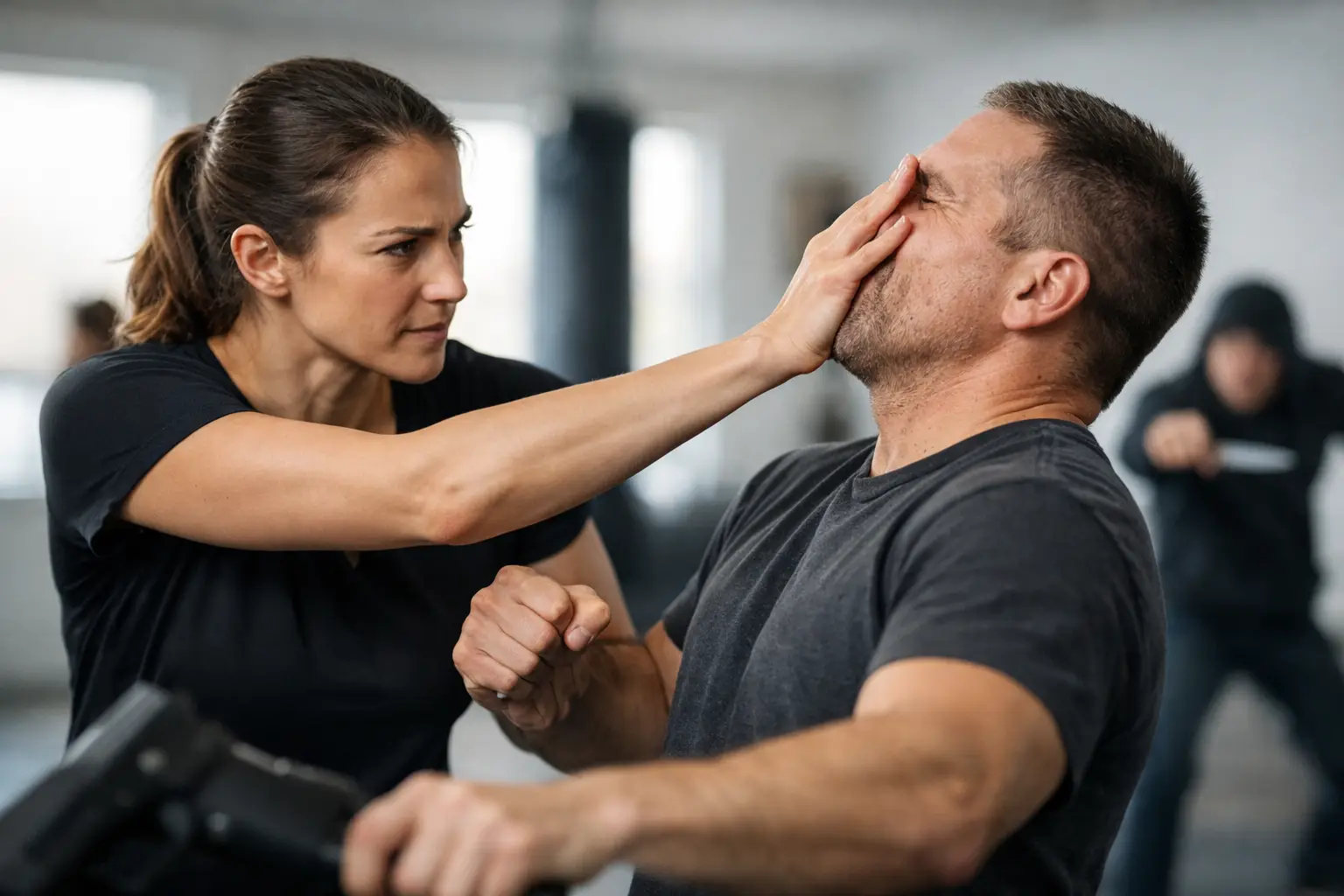
A lot of people ask this question when they are trying to choose a martial art, protect their family, or stop feeling unprepared in public: what is the most practical self defense? The honest answer is not a single technique, style, or trick. Practical self-defense is anything you can apply under stress, in close range, with limited time, limited space, and real consequences.
That matters because real violence is messy. It does not happen on a smooth mat with a referee, a warm-up, and clear rules. It happens fast. It happens in parking lots, hallways, elevators, sidewalks, and doorways. Sometimes there is one attacker. Sometimes there is more than one. Sometimes a weapon appears late. If your training only works when conditions are perfect, it is not practical.
What makes the most practical self defense practical?
The most practical self defense has four traits. First, it is simple enough to remember under pressure. Second, it works against resistance, not just cooperation. Third, it accounts for common real-world threats like aggressive grabs, punches, tackles, and weapons. Fourth, it includes decision-making, not just movement.
That last point gets overlooked. Self-defense is not only about hitting harder. It is about reading danger early, managing distance, using your voice, protecting loved ones, escaping when possible, and knowing when physical action is necessary. A person with great technique but poor judgment can still make bad decisions. A person with decent technique and strong awareness often stays safer.
The styles people mention most
When people compare martial arts for self-protection, they usually bring up boxing, wrestling, Brazilian jiu-jitsu, Muay Thai, Krav Maga, karate, and Filipino martial arts. All of them offer value. None of them is perfect on its own.
Boxing builds timing, footwork, distance management, and the ability to hit with force under pressure. That is useful. The trade-off is that boxing does not address weapons, multiple attackers, or many standing grappling problems in depth.
Wrestling is highly practical because it teaches balance, base, pressure, takedown defense, and control against someone who does not want to cooperate. That is a huge advantage in any close-range confrontation. The trade-off is that going to the ground may be risky if there are multiple attackers or hard surfaces involved.
Brazilian jiu-jitsu teaches leverage, escapes, positional control, and submissions. It helps smaller people understand what happens when a fight crashes into clinch range or the ground. The limitation is not the art itself. It is how it is trained. If training ignores strikes, weapons, and the possibility of a second attacker, the student may become too comfortable staying on the ground.
Muay Thai develops tough striking, strong clinch skills, and composure under pressure. Karate can be very practical too, especially when it includes solid distance control, explosive striking, and realistic application instead of point-focused habits. Krav Maga is designed around self-defense, but quality varies widely from school to school. Good training is pressure-tested and honest. Bad training is theatrical and overconfident.
Filipino martial arts deserve more attention in this conversation because they address edged weapons, impact weapons, movement angles, and transitions between armed and empty-hand encounters. That matters in the real world because weapons change everything. An art that prepares students to recognize, avoid, and respond to weapon threats has clear practical value.
The most practical self defense is a training method, not a label
If you want the shortest answer, here it is: the most practical self defense is training that combines awareness, striking, clinch skills, takedown defense, ground survival, and weapon awareness under realistic pressure.
That is why style labels can be misleading. Two schools can use the same name and produce completely different results. One may run safe but realistic drills, build timing against resistance, and teach students how to handle adrenaline. Another may teach long combinations against compliant partners and call it street-ready. Same label, different outcome.
A practical program should train the ugly parts of conflict. Verbal aggression. Flinching. Covering up when surprised. Fighting from bad positions. Escaping grabs against resistance. Managing panic. Protecting space in tight environments. Recognizing pre-assault cues. If those parts are missing, the training may be fun or athletic, but it is not complete.
Pressure changes everything
People often think self-defense fails because the technique was wrong. Sometimes that is true. More often, the problem is that the person never trained the technique under enough pressure to use it when their heart rate spikes.
Stress affects memory, coordination, vision, and timing. Fine motor skills become less reliable. Complex sequences break down. That is why the most practical self defense usually relies on gross motor movements, clear decision trees, and repetition against live resistance.
This does not mean every class should feel like chaos. Good instruction is structured. Beginners need safety, coaching, and progression. But over time, students should experience controlled unpredictability. That is how confidence becomes real. Not confidence based on fantasy, but confidence based on having dealt with pressure before.
Why weapons training matters
A lot of martial arts schools avoid weapons because the topic feels advanced or uncomfortable. That is a mistake. You do not need to become a weapons expert to benefit from weapons training. You need to understand how quickly a threat changes when a knife or impact weapon is introduced.
The most practical self defense accounts for that reality. It teaches students not to assume an empty-hand fight will stay empty-hand. It teaches distance, positioning, awareness of the hands, and the urgency of escape. It also changes how students think about everyday confrontations. They become less casual, less ego-driven, and more focused on getting home safe.
For many adults and parents, this is where practical training separates itself from sport-only training. Sports build valuable attributes. Timing, conditioning, grit, and resilience all matter. But self-defense needs another layer – the layer that asks, what happens if there is a concealed weapon, a wall behind you, a child beside you, or no space to move?
What beginners should look for
If you are new, do not get stuck searching for the perfect style. Look for the right school and the right training culture.
A strong self-defense program should explain why techniques work, not just what to copy. It should include scenario-based training without turning class into fear-based theater. It should let beginners build skill safely while still introducing resistance, timing, and decision-making. It should also be honest about trade-offs.
For example, striking is essential, but striking alone is not enough. Ground skills are important, but staying on the ground can be dangerous. Weapons awareness is necessary, but no one should pretend knife defense is easy or clean. Practical training respects reality. It does not sell certainty where certainty does not exist.
If a school promises that a few moves will make you unbeatable, walk away. If it treats self-defense like a flashy demo instead of a trainable skill, keep looking. The right environment is serious, structured, and supportive. Students should leave class feeling challenged, not misled.
The most practical self defense for adults and families
For working adults, practical self-defense needs to fit real life. That means training that improves fitness, sharpens awareness, and builds functional skills without requiring years before anything becomes usable. It should help you move better, react faster, and carry yourself with more confidence.
For teens and families, the equation is similar but broader. Good training should build discipline, composure, and judgment along with physical ability. Confidence is important, but controlled confidence is better. The goal is not to create reckless people who want to prove themselves. The goal is to build capable people who can recognize danger, respond effectively, and avoid unnecessary conflict.
That is one reason programs that blend empty-hand skills with weapon awareness tend to stand out. They prepare students for a wider range of problems. At Urban Edge Martial Arts, that practical approach is a core part of the training mindset because real-world readiness demands more than one answer.
So what should you actually train?
Train awareness first, because the best fight is the one you avoid early. Train striking so you can create damage and space if you must. Train clinch and takedown defense so you do not fall apart when someone crashes forward. Train ground survival so you can escape bad positions. Train weapon awareness so you stop thinking like every threat is empty-handed.
Just as important, train consistently. The most practical self defense is not the art you admire online. It is the one you practice enough to trust when things get ugly.
If you want something real, choose training that makes you more alert, more capable, and harder to overwhelm. Fancy labels fade fast under pressure. Honest practice does not.