
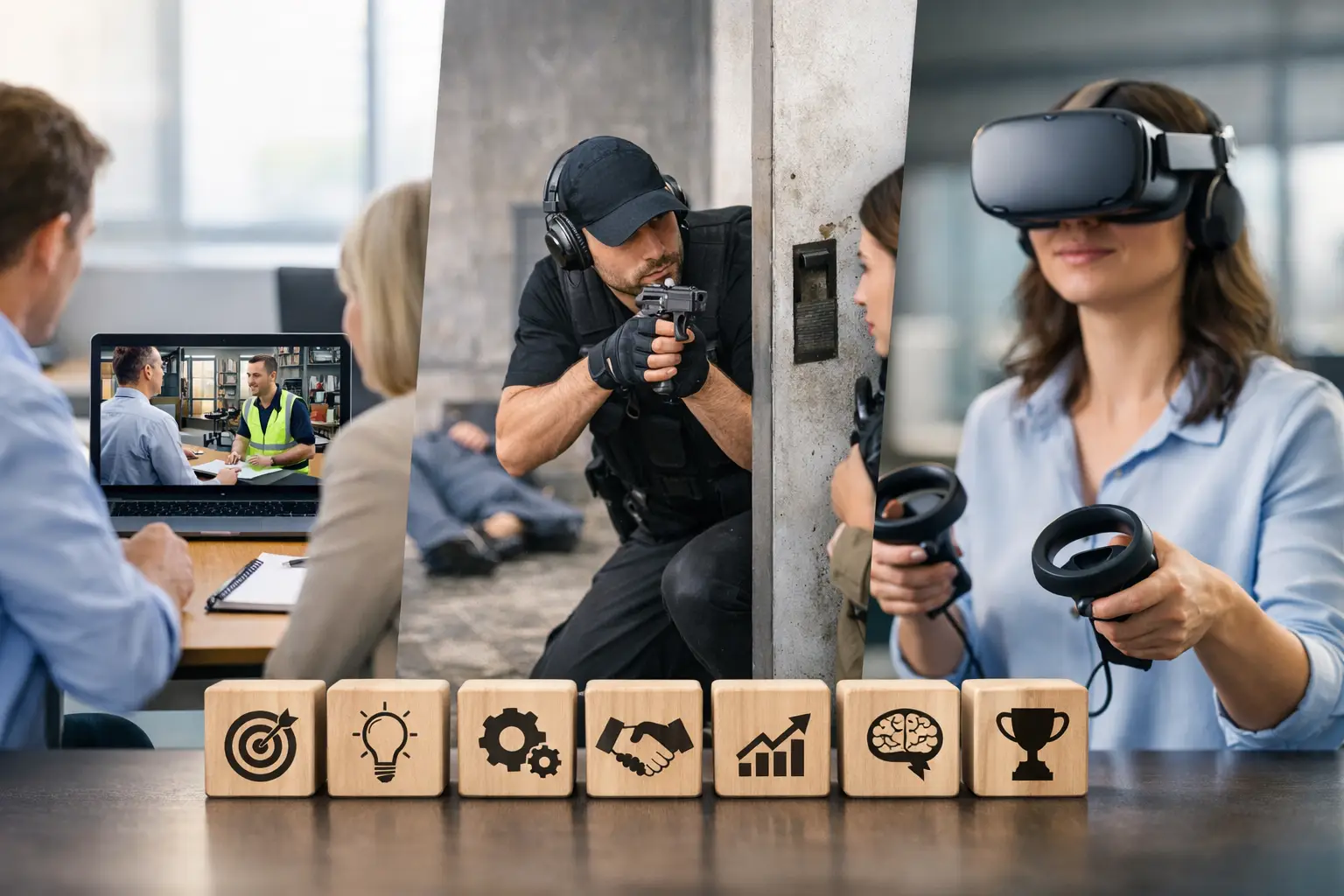
A lot of people feel strong on the heavy bag and sharp in class – until they imagine a real confrontation. Tight space. Loud noise. Adrenaline. Uncertainty. That is exactly why the top benefits of scenario based training matter so much. It prepares you for more than technique. It prepares you for pressure.
For anyone serious about self-defense, there is a clear difference between practicing moves in isolation and applying them in context. A clean drill has value. Repetition builds mechanics. But if training never forces you to read intent, manage distance, make decisions, and respond under stress, there is a gap between practice and reality. Scenario based training helps close that gap.
Why the top benefits of scenario based training stand out
Scenario based training puts skills inside situations that resemble real life. Instead of repeating one movement on command, students work through a problem. That problem might involve verbal aggression, a confined area, an unexpected grab, multiple attackers, or the threat of a knife or impact weapon. The goal is not drama. The goal is relevance.
This approach matters because real confrontations are rarely neat. People freeze. Footing changes. Space disappears. Plans fall apart. The student who has only memorized sequences may struggle when the script breaks. The student who has trained in scenarios is more likely to adapt.
That does not mean scenario work replaces technical drilling. It should not. Strong fundamentals are still the base. But once those basics exist, scenario training teaches you when to use them, how to use them, and how to stay functional when stress rises.
It builds decision-making, not just movement
One of the biggest advantages of scenario training is that it teaches judgment. In a real encounter, the first challenge is often not throwing a strike or escaping a hold. It is reading what is happening fast enough to choose the right response.
That might mean de-escalating. It might mean creating distance and leaving. It might mean controlling a threat before things get worse. Good self-defense is not just physical. It is tactical.
Scenario work trains students to assess cues, manage timing, and act with purpose. Instead of waiting for an instructor to call the next step, they learn to think while moving. For adults with jobs, families, and daily responsibilities, that kind of training has obvious value. It reinforces calm under pressure, not panic under pressure.
It makes confidence more honest
A lot of programs sell confidence. The better question is what that confidence is built on.
False confidence can be dangerous. If someone believes they are prepared because they can perform in a predictable setting, they may overestimate what they can handle outside the gym. Scenario based training gives students a more honest picture of their strengths and limits. That is a good thing.
When you have trained with surprise, pressure, and resistance, confidence becomes steadier. You know what it feels like to problem-solve when your heart rate spikes. You know where your reactions hold up and where you still need work. That kind of confidence is not loud. It is grounded.
For teens, this often shows up as better composure. For parents, it means peace of mind. For professionals, it can mean carrying themselves with more awareness and less hesitation.
It improves retention because skills have context
People remember what makes sense to them. A disconnected technique can feel abstract, especially for beginners. But when that same technique is tied to a clear situation, retention improves.
If a student understands that a movement helps them create space in a hallway, break contact during a grab, or manage an angle against a weapon threat, the lesson sticks. The brain tends to keep information that feels useful and specific.
This is one reason scenario training works well across age groups. Kids learn better when they understand why a skill matters. Adults also respond well to practical context because they are usually training for a reason. They want self-protection, fitness with purpose, or a structured path to becoming more capable.
That said, context has to match the student. Beginners need manageable scenarios. Advanced students need more variables and less predictability. Good instruction scales the pressure without turning training into chaos.
It exposes the limits of sport-only habits
Sport training can build timing, conditioning, speed, and toughness. Those are real strengths. But sport has rules, boundaries, and expected patterns. Self-defense does not.
Scenario based training helps students recognize where sport habits may help and where they may create problems. For example, backing straight up might be acceptable in one setting and dangerous in another. Focusing only on scoring or trading may also fall apart when weapons, multiple attackers, or environmental obstacles enter the picture.
This is where practical self-defense training earns its value. It teaches students to account for surroundings, legal and ethical choices, and the possibility that escape is the best outcome. At Urban Edge Martial Arts, that practical mindset is central because training is built around what people may actually face, not just what works inside a controlled match.
It prepares you for adrenal stress
Under stress, fine motor skill can degrade. Attention narrows. Breathing changes. People either rush, freeze, or get stuck trying to force a plan that no longer fits. You cannot eliminate that response, but you can train to function inside it.
Scenario based training introduces stress in a measured way. Maybe it is time pressure. Maybe it is verbal aggression. Maybe it is uncertainty about what happens next. Over time, students become more familiar with the physical and mental effects of pressure.
That familiarity matters. The first time your body experiences stress should not be during a real emergency. When training has already exposed you to elevated heart rate, confusion, and fast decision-making, you are less likely to shut down.
Of course, realism has limits. No responsible school should pretend a drill perfectly recreates a real assault. But training can still develop useful habits – breathing, posture, awareness, movement, and decisiveness – that transfer when it counts.
It sharpens awareness of environment and distance
Real self-defense happens somewhere. Parking lots, doorways, stairwells, sidewalks, kitchens, elevators, crowded rooms. Every environment changes what is possible.
Scenario training forces students to pay attention to space. Can you move left or right? Is there a wall behind you? Are there obstacles on the ground? Is there a second person nearby? Those details influence everything from stance to escape route.
Distance matters just as much. Many people do not realize how quickly a threat can close in. Scenario work teaches students to read range better, manage angles, and avoid giving up position without realizing it. Those are not flashy skills, but they are often the difference between control and panic.
It keeps training realistic without losing structure
Some people hear “realistic training” and picture chaos. That is not good training. Realism without control becomes unsafe and unproductive. On the other hand, too much control creates a false sense of security. The best programs balance both.
That balance is one of the top benefits of scenario based training when it is taught well. Students face realistic problems in a coached environment. They can make mistakes, learn from them, and improve without the reckless mindset that sometimes gets mistaken for toughness.
This also makes scenario training more approachable for beginners than many assume. You do not need to be advanced to benefit from realistic context. You just need good instruction, clear boundaries, and progressive intensity.
It supports long-term growth for kids, teens, and adults
Scenario training is not only about emergency response. It also develops traits that carry into everyday life.
Kids learn focus, boundaries, and assertive communication. Teens gain discipline and stronger decision-making at an age when social pressure can cloud judgment. Adults often notice improvements in awareness, resilience, and stress management. Families appreciate that training has a practical purpose beyond fitness alone.
There is also a motivational benefit. People are more likely to stay consistent when training feels meaningful. Hitting pads is fun. Learning techniques is satisfying. But understanding how skills apply in real life gives training weight. It turns martial arts from a hobby into a capability.
That is why scenario based training continues to matter long after the first few classes. It keeps students engaged, honest, and progressing in ways they can feel.
The real value is simple. When training reflects the pressure, uncertainty, and decision-making of real life, students become harder to rattle and better prepared to act. Not perfect. Not fearless. Just more capable, more aware, and more ready when it matters.