
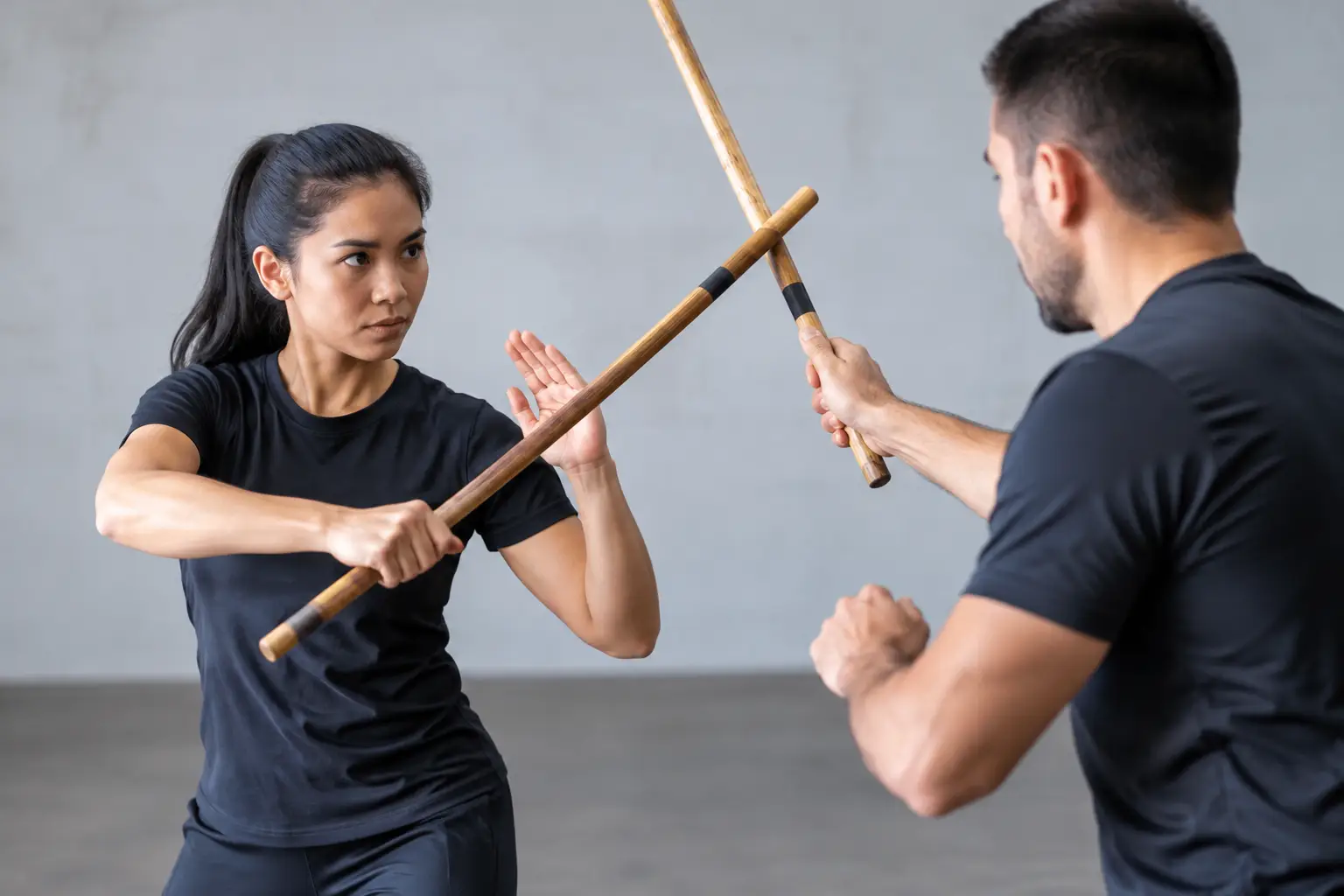
A Kali stick moving too fast before a student can control distance is not realistic training. It is an avoidable injury waiting to happen. To practice safe kali drills, you need more than protective gear. You need clear rules, progressive training, focused partners, and an instructor who knows when to slow the drill down.
Kali develops timing, coordination, awareness, and practical weapon-defense skills. It can also expose sloppy habits quickly. A missed line, an uncontrolled swing, or a partner who treats every round like a fight can turn productive practice into a trip to the sidelines. Smart training lets you build pressure without gambling with your safety.
Practice Safe Kali Drills by Managing Control
Control starts before the first strike. Partners should agree on the drill, the target area, the speed, and the contact level. If those details are unclear, stop and clarify them. Assumptions are where many training injuries begin.
A beginner does not need to prove toughness by swinging hard. The first job is learning mechanics: how to hold the training weapon securely, how to generate clean angles, how to protect the free hand, and how to recover balance after each movement. Speed comes later. Power comes later. Neither matters if you cannot stop your weapon precisely where it needs to stop.
Use a simple standard: your partner should never have to guess whether a strike will land hard. In a controlled drill, both people know the intended range and response. When contact is part of the exercise, it should be deliberate and appropriate for the equipment being used.
This does not mean Kali training should be timid. It means intensity must be earned. Technical reps build the foundation. Controlled movement adds timing. Resistance tests whether the skill still works when your partner is not cooperating. Each stage has value, but skipping stages creates bad habits and unnecessary risk.
Start Slow Enough to See Mistakes
Slow practice is where students learn the details that disappear at full speed. You can see whether your hand position leaves fingers exposed, whether your feet cross during movement, and whether your partner is actually in range. These are not minor details. In a real confrontation, poor positioning can cost you options. In training, it can cost you a bruised knuckle or worse.
At a slower pace, communicate constantly. Say “light contact,” “reset,” or “slower” when needed. A good partner respects that immediately. There is no prize for continuing a drill that has become unsafe or confusing.
Once both partners show clean movement repeatedly, increase only one variable at a time. Add a little speed, then add movement, then add a decision-making element. Do not add speed, power, unpredictability, and complex footwork all at once. That is not pressure testing. It is chaos.
Choose Equipment That Matches the Drill
Training tools should fit the goal. Light rattan sticks are common for technical work, but even light sticks can cause painful injuries when used carelessly. Padded weapons may be more appropriate for higher-contact drills, especially when students are learning to move under pressure. A rigid training knife, a soft training knife, and an impact weapon each create different safety needs.
Protective gear is not permission to abandon control. It gives you a margin for error, not a free pass to hit harder. Eye protection is especially valuable when drills involve weapons moving near the head. Depending on the contact level, gloves, forearm guards, headgear, and body protection can help keep training productive.
Check your gear before class. Splintered sticks, cracked protective equipment, loose helmet straps, and damaged gloves should be replaced or removed from use. A worn tool is less predictable, and unpredictable equipment makes controlled practice harder.
The training space matters too. Give pairs enough room to move without colliding with another group. Keep bags, water bottles, and loose equipment off the floor. When weapons are involved, a clear lane and a clear mind are part of the safety system.
Train Distance Before You Train Speed
Most accidental contact happens because someone misjudges range. Students often focus on the weapon and forget the feet. But range changes with every step, lean, retreat, and angle. A strike that was safely short one second ago can become a hard hit when a partner moves forward unexpectedly.
Build drills that teach range in layers. Begin with stationary positioning so students can recognize a safe striking distance. Then add simple entries and exits. After that, use controlled feeding, where one partner gives predictable attacks and the other practices a specific response. Only when both partners can manage distance should the drill become more open.
This approach also helps students learn restraint. In practical self-defense, the goal is not to exchange shots or win a point. It is to recognize danger, protect yourself, create an opportunity to disengage, and get to safety. Training with disciplined distance reinforces that mindset from day one.
Keep the Free Hand Protected
In Kali, students naturally watch the stick. The problem is that the empty hand often drifts into danger. A free hand can be used to check, monitor distance, protect the head, or manage contact, but it must not float carelessly into the striking line.
Make this a constant coaching point. Keep the non-weapon hand active and protected. Do not reach for a moving weapon without a clear purpose and appropriate timing. If a drill includes checking or controlling actions, begin with light resistance and clean structure. Trying to force the movement against a stronger partner before the position is correct can strain wrists, fingers, and elbows.
Build Pressure Without Losing Discipline
Pressure drills are valuable because real-world encounters are stressful, fast, and unpredictable. Still, the drill needs boundaries. Set the objective clearly. Is one student trying to maintain distance? Is the defender working to identify an angle and exit? Is the goal simply to stay composed while responding to a known attack?
A narrow objective produces better learning than an uncontrolled free-for-all. It lets students measure improvement, recognize errors, and reset safely. As competence grows, add realistic elements such as verbal pressure, limited visibility, environmental obstacles, or a second moving person. Each addition should serve the lesson, not make the drill look dramatic.
Intensity is also personal. An athletic adult with prior training may be ready for more movement and resistance than a first-time student. A teen may need a different pace than an experienced private trainee. Good coaching adjusts the drill without lowering the standard. Everyone should be challenged, but no one should be thrown into a level of contact they cannot manage responsibly.
At Urban Edge Martial Arts, structured instruction matters because practical training only works when students can train consistently. A tough class that leaves people injured does not build confidence. A smart class that develops control, awareness, and resilience does.
Know When to Stop and Reset
Stopping is a skill. If your grip slips, your gear shifts, your partner looks overwhelmed, or the drill begins to speed up beyond the agreed level, call a reset. Do it early. A reset is not an apology and it is not weakness. It is evidence that you are paying attention.
Watch for fatigue as well. Tired students tend to overextend, drop their hands, crowd distance, and lose control of the weapon path. Short, focused rounds with recovery time are often safer and more useful than pushing through long, sloppy repetitions.
After a drill, take a few seconds to discuss what happened. Did the range collapse? Did one partner move faster than agreed? Was the equipment appropriate? Brief feedback turns a mistake into a correction instead of allowing it to become a habit.
The strongest Kali students are not the ones who swing hardest in the first round. They are the ones who can stay composed, protect their training partners, and apply greater intensity only when their control is ready for it. Train smart, respect the weapon, and let every safe repetition build the confidence you can rely on.