
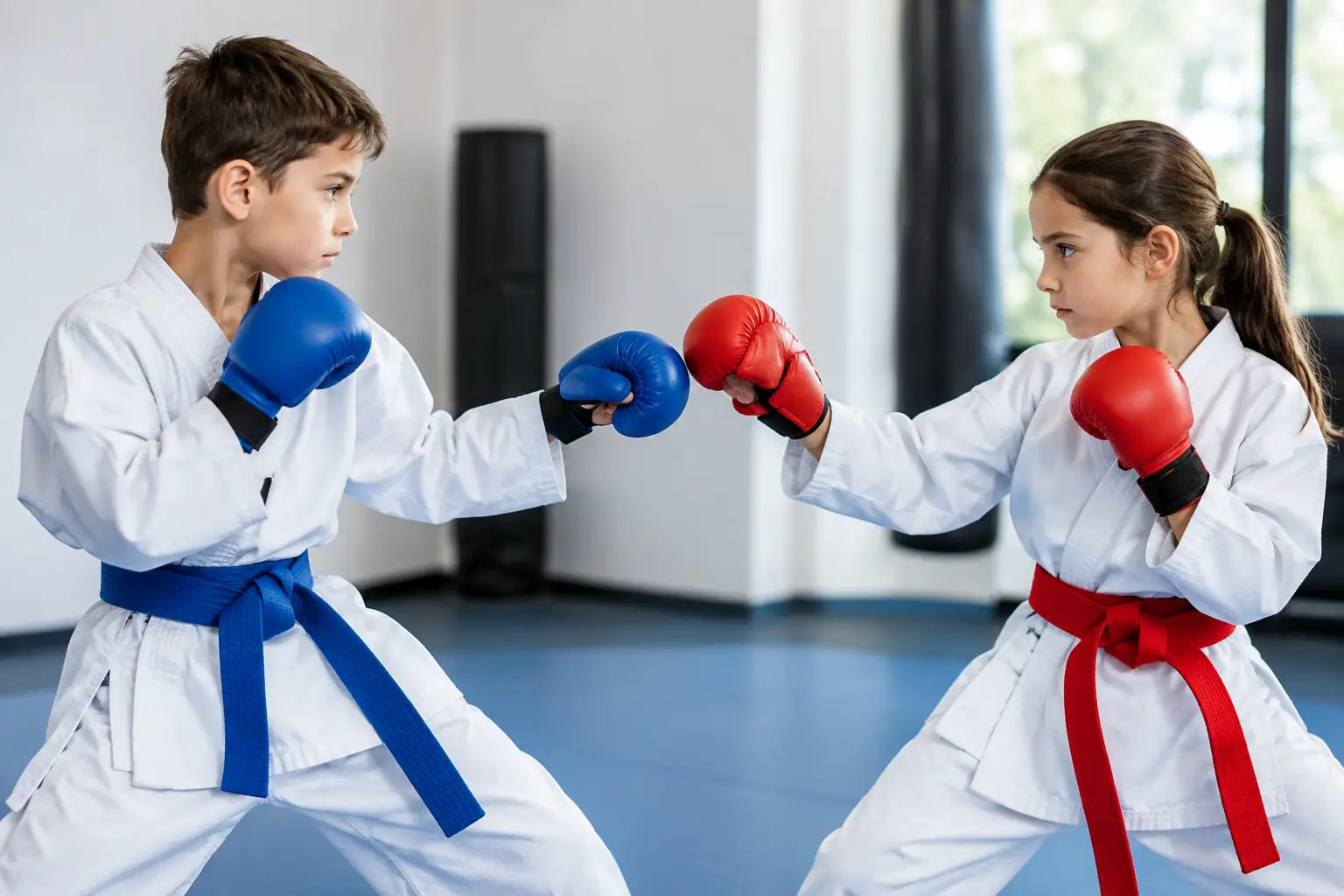
A child can memorize every block, strike, and stance in class, then freeze the first time someone moves toward them with real speed. That gap is exactly why parents ask: do kids need sparring? The honest answer is no, not at every age or stage. But well-run, age-appropriate sparring can become one of the most valuable parts of martial arts training.
Sparring should never mean putting children into a fight and hoping they figure it out. It is a controlled learning tool. Done properly, it helps kids manage distance, stay composed under pressure, make safe decisions, and learn that confidence comes from practice, not from pretending danger does not exist.
Do Kids Need Sparring to Learn Martial Arts?
Kids do not need hard sparring to benefit from martial arts. They can build coordination, focus, fitness, balance, discipline, and respect through drills, forms, pad work, partner exercises, and technical training. For many beginners, those foundations should come first.
What sparring adds is decision-making. A pad does not move away, interrupt a technique, crowd a student, or create uncertainty. A training partner does. Even light, structured sparring teaches a child to recognize openings, control their reactions, recover after a mistake, and keep listening when their heart rate rises.
That does not mean every child should spar immediately. The goal is not to make kids aggressive or turn class into a competition for who can hit hardest. The goal is to help them become calm, capable, and responsible when movement becomes unpredictable.
For self-defense-focused martial arts, that distinction matters. Real-world safety depends on awareness, distance, verbal boundaries, escape routes, and judgment. Sparring is only one training method, but it can help students apply those skills against a moving person rather than treating them like a choreographed routine.
Sparring Is Not Fighting
Parents often hear the word “sparring” and picture children trading uncontrolled punches. That is not quality instruction.
Good youth sparring is supervised, progressive, and built around clear rules. It may begin with simple games that teach movement and distance. One student might practice reaching a target with a controlled touch while the other practices stepping away and maintaining balance. Later, students may work on limited combinations, defensive reactions, or light rounds with approved protective equipment.
The instructor sets the intensity, the allowed techniques, the distance, and the pace. Students are paired by size, maturity, and experience whenever possible. They are taught that control is a skill, not a sign of weakness.
A child who throws hard because they are frustrated is not “tough.” They need coaching. A child who can make contact lightly, stop when asked, and take feedback without shutting down is demonstrating the kind of discipline that martial arts is meant to build.
Signs a Child Is Ready for Sparring
Age alone does not decide readiness. Two children of the same age may have very different levels of coordination, emotional control, and ability to follow instructions. A strong program adjusts the work to the student rather than forcing every student through the same timeline.
A child may be ready for beginner sparring when they can consistently follow safety rules, keep their equipment on properly, and use basic techniques with control. They should be able to understand that their partner is a teammate, not an opponent to defeat. They also need to handle small setbacks without becoming overwhelmed, angry, or reckless.
Look for practical signs in class. Can your child stop immediately when the instructor says stop? Can they accept a light, controlled touch without crying, lashing out, or trying to retaliate? Can they focus on a single task while moving? These are more useful indicators than whether they know a certain number of techniques.
Some children are physically ready before they are emotionally ready. Others are cautious at first but become comfortable once they understand the rules. Neither response is a problem. Sparring should challenge a child without making them feel unsafe or ashamed.
What Safe Kids’ Sparring Should Look Like
Safety starts long before the round begins. Children need to know what they are practicing, why they are doing it, and what behavior is expected. They should never be surprised by contact or pressured to continue if they are distressed.
A responsible youth sparring program includes several safeguards:
- Clear rules about permitted targets, techniques, and contact level.
- Protective gear appropriate to the activity and the child’s size.
- Direct instructor supervision, not unsupervised partner work.
- Pairings based on size, skill, and temperament whenever possible.
- Frequent pauses for coaching, corrections, and emotional check-ins.
- A culture where students can say they need a break without being ridiculed.
The best instructors do not simply watch for injuries. They watch for habits. A student who closes their eyes, turns away, holds their breath, loses control, or becomes overly fearful needs a different level of training. The answer may be a slower drill, more pad work, or a smaller step before returning to live movement.
Parents should also understand that safe sparring does not mean zero discomfort. A child may feel nervous before their first round. They may be surprised by how quickly another student moves. Learning to settle those feelings in a controlled setting can be productive. The line is crossed when nervousness becomes panic, contact becomes careless, or a child is made to feel that asking for help is failure.
When Kids Should Wait
There is no prize for starting too soon. A child may benefit more from partner drills than free sparring if they are new to martial arts, struggle to follow boundaries, or are still developing body control.
Children who have recently had a concussion, injury, or medical concern should wait for appropriate professional clearance and follow the school’s safety policies. Parents should also speak up if a child has anxiety around contact, a history of bullying, or a difficult reaction after class. That does not automatically mean sparring is off limits. It means the instructor needs context and a thoughtful plan.
Sometimes the right approach is to begin with non-contact movement drills. A child can learn to manage distance, move around a partner, use verbal commands, and create an exit without being hit. Progress can be gradual. A good martial arts school does not confuse pressure with progress.
The Benefits Go Beyond Self-Defense
The value of supervised sparring is not limited to learning how to block or counter. Kids also learn how to respond when a plan does not work. They experience mistakes in a setting where mistakes are expected, corrected, and left behind on the mat.
That builds resilience. A child who gets tagged lightly, resets, and tries again learns a useful lesson: setbacks do not have to control the next decision. They also learn respect for other people’s space and strength. It is hard to develop real restraint if a child has never practiced using power carefully around another person.
For quieter children, sparring can build voice and presence. For highly energetic children, it can teach restraint and accountability. For both, the right class offers a structured outlet that rewards focus over chaos.
What Parents Should Ask Before Enrolling
Ask how the school introduces sparring to beginners. Find out whether students are grouped by age and size, what protective equipment is used, and whether participation is gradual. Listen closely to how instructors talk about winning. A healthy program values control, learning, and safety more than collecting points or proving toughness.
You can also ask what happens when a child is nervous or gets too rough. The answer should involve coaching, adjustment, and clear boundaries. It should not be “they will get used to it.”
At Urban Edge Martial Arts, practical training is built progressively because confidence is earned through skill and repetition. Kids need structure before pressure, and they need capable instructors who know how to make training challenging without making it reckless.
The right question is not whether your child must spar to be successful in martial arts. Ask whether they are being given the right next challenge. When sparring is introduced at the right pace, it can help a child stand taller, think clearer, and stay composed when life gets uncomfortable.