
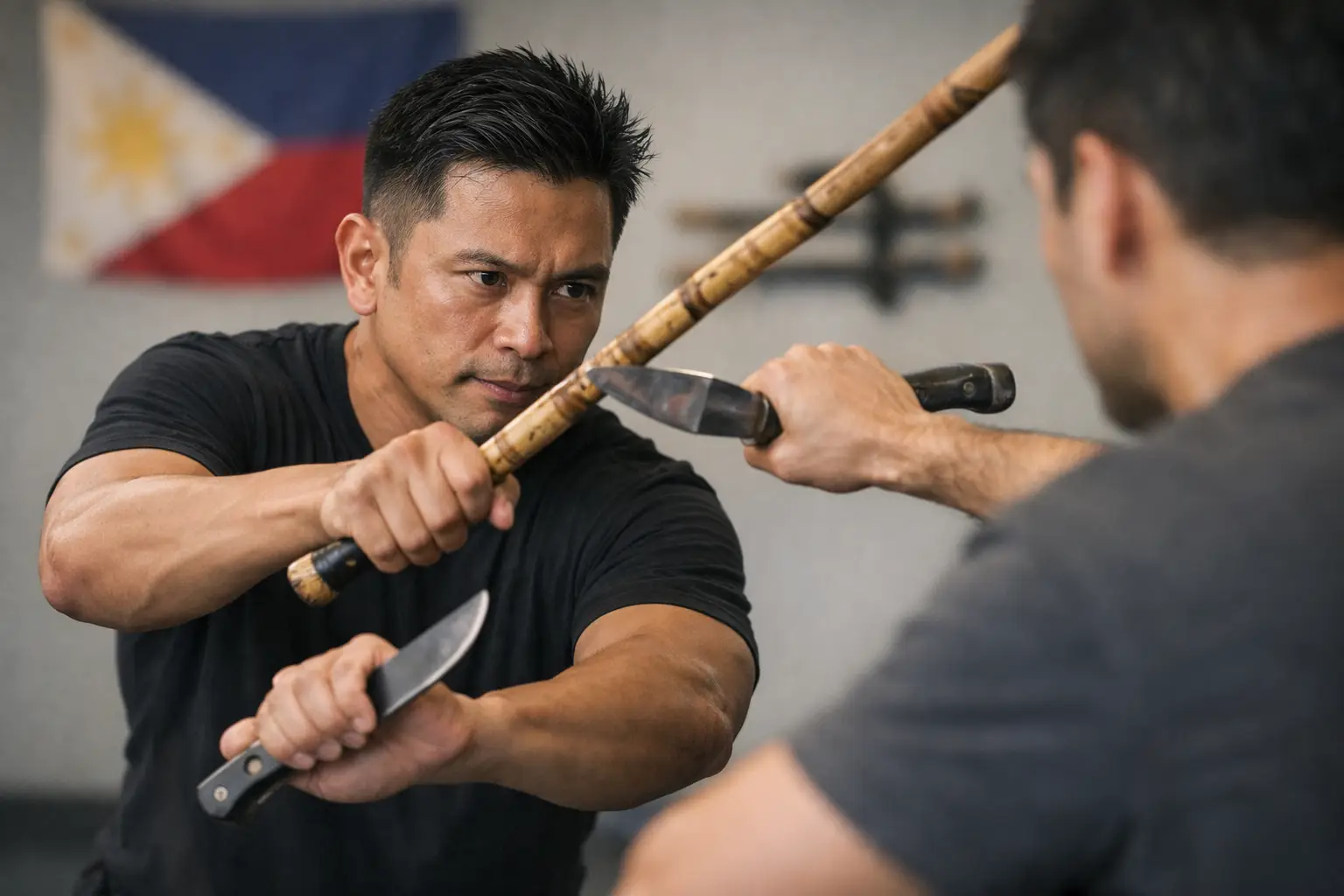
A lot of people realize they need self-defense training at the same moment they realize most martial arts were never built for the situations they actually fear. They are not worried about points, perfect stances, or winning a match under rules. They are worried about being grabbed in a parking lot, facing an aggressive stranger, or freezing when violence shows up fast. That is where filipino martial arts for self defense stand apart.
These systems were shaped around survival. They train timing, awareness, footwork, weapon defense, and the ability to respond under pressure. Just as important, they do not create a false sense of security. Good training teaches what works, what fails, and what depends on distance, timing, and commitment. If your goal is practical personal protection, that matters.
Why filipino martial arts for self defense are different
Filipino martial arts, often taught through systems like Kali, Eskrima, and Arnis, have a reputation for weapons training. That reputation is earned. Students learn to understand angles of attack, movement, and body mechanics from the start, often using sticks as training tools. But the bigger reason these arts fit self-defense so well is not the weapon work alone. It is the mindset.
The training assumes violence can be messy, fast, and unfair. It assumes there may be more than one attacker. It assumes weapons can appear. It teaches you to move off line, protect your center, control the range, and act decisively when hesitation would cost you.
That does not mean every class is chaos or that every student is preparing for the worst-case scenario every night. It means the system is built around realistic possibilities instead of ideal conditions. For adults, parents, and teens who want training that makes sense outside the gym, that is a major difference.
Practical skills that carry over to real situations
One of the biggest strengths of filipino martial arts for self defense is transferability. A student may start by learning angles with a stick, but those same lines appear in empty-hand striking, knife defense concepts, limb control, and close-range responses. You are not memorizing isolated techniques. You are learning a framework.
That framework usually includes footwork, distance management, defensive reflexes, and coordinated striking. It also teaches students to recognize when they are too close, too static, or too exposed. Those are mistakes people make under stress, especially with no training.
Another advantage is how quickly beginners can understand the value of movement. In many systems, footwork is not a warm-up detail. It is survival. Standing still and trading shots may work in sport. In self-defense, it can get you trapped. Filipino martial arts teach you to angle out, reposition, and disrupt an attack before it builds momentum.
For many students, that alone changes how they carry themselves. Better movement creates better balance. Better balance creates more confidence. And confidence often improves awareness before any physical response is needed.
Weapons awareness changes how you see danger
Even if you never plan to carry a weapon and never expect to face one, weapons-based training can sharpen your understanding of real-world violence. It teaches respect for range, speed, and consequences. A knife attack, for example, is not something you rise to meet with movie-style confidence. Serious training makes that clear quickly.
That kind of honesty is valuable. Good instructors do not sell fantasy. They teach students how to reduce exposure, escape when possible, and respond with disciplined aggression only when necessary. In that sense, weapons training is not about making people reckless. It often makes them more cautious, more alert, and more realistic.
Empty-hand skill still matters
People sometimes assume Filipino martial arts are only about sticks and blades. That misses half the picture. Strong programs connect weapon mechanics to empty-hand striking, trapping, clinch responses, takedown awareness, and practical counterattacks.
If someone grabs, shoves, swings wildly, or closes distance aggressively, the same principles still apply. You manage the line of attack, protect yourself, create an angle, and respond with purpose. The training is direct. It is not built around flashy combinations that only work if your attacker cooperates.
What beginners should expect
If you are new, the idea of training in an art known for weapon work can sound intense. In reality, a good school introduces these skills progressively. Beginners do not get thrown into high-speed drills with no structure. They build fundamentals first – stance, movement, coordination, awareness, and controlled partner work.
That matters for two reasons. First, it keeps training safe and sustainable. Second, it helps students develop confidence the right way. False confidence is dangerous. Real confidence comes from repetition, coaching, and pressure-tested improvement over time.
Most adults who start practical self-defense training are not trying to become fighters. They want to feel less vulnerable. They want better conditioning. They want to know what to do if a situation turns physical. Filipino martial arts can meet those goals, but only if the instruction stays structured and grounded in application.
For families, the same logic applies. Parents want more than activity. They want discipline, focus, and age-appropriate self-protection skills taught in a responsible environment. Teens often benefit from the confidence and self-control that come from realistic training, especially when it is guided by clear standards and a strong community.
Not every self-defense goal is the same
This is where honest training matters. The best self-defense program depends on who you are, what you need, and how you plan to train.
A working professional might want awareness, de-escalation, and efficient responses to common assaults. A parent may want confidence, fitness, and a practical skill set that can actually be retained. A teen may need structure, resilience, and better decision-making under pressure. An experienced martial artist may want to fill a major gap in weapon awareness and close-range tactics.
Filipino martial arts can serve all of those goals, but the training emphasis may look different. Some schools lean heavily into tradition. Others stay almost entirely tactical. The strongest option for self-defense is usually a program that balances technical precision with realistic application.
That is also why scenario-based training matters. Pad work and drills are useful, but they are not enough on their own. Students need some exposure to pressure, unpredictability, verbal stress, and changing distance. They need to practice decision-making, not just motion.
How to tell if a school is actually teaching self-defense
A school can say “self-defense” on the front page and still deliver mostly choreography. The difference shows up in how they train.
Look for instruction that addresses realistic attacks, not only clean punches from ideal range. Look for training that includes movement, situational awareness, and control under stress. Look for coaches who explain when to disengage, when to create space, and when a tactic has serious limitations.
You should also pay attention to the culture. Practical training does not need an ego-heavy environment. In fact, that usually gets in the way. The right school is disciplined, demanding, and supportive. It helps beginners progress without watering down the purpose of training.
At Urban Edge Martial Arts, that practical standard is what makes the difference. Students train with purpose, build confidence through structure, and develop skills that make sense for real urban self-defense scenarios rather than point-based competition.
The fitness and confidence benefits are real, but secondary
Many people start because they want protection and stay because they feel stronger, sharper, and more capable in every part of life. That is one of the best side effects of serious training. Your conditioning improves. Your reflexes improve. Your stress tolerance improves.
Still, those benefits should not distract from the main point. Fitness alone is not self-defense. Confidence alone is not self-defense. A hard workout is valuable, but if it does not improve your awareness, timing, positioning, and decision-making, it will not fully prepare you for violence.
Filipino martial arts are effective because they build the whole picture. They teach body mechanics, yes, but also judgment. They make students more prepared without pretending any system makes you invincible.
That balance is worth paying attention to. The best training helps you avoid bad situations when possible, respond effectively when necessary, and keep learning with humility.
If you are looking for a martial art that respects how real violence happens, filipino martial arts for self defense are hard to ignore. They are practical, adaptable, and built around function. The real value, though, is not just in learning how to strike or counter. It is in becoming harder to intimidate, harder to overwhelm, and more ready to protect yourself and the people who count on you.