
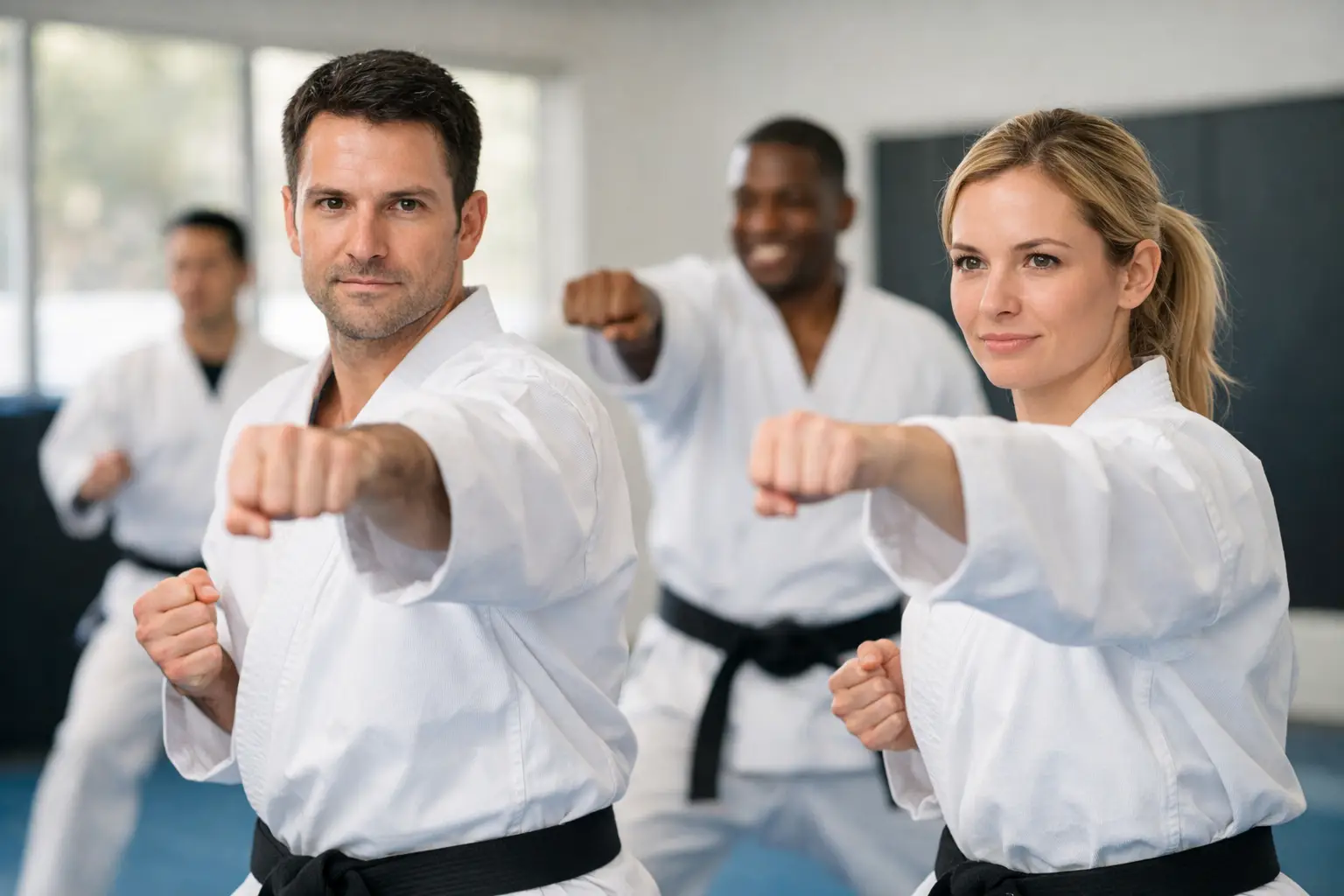
You do not need to be in shape, naturally aggressive, or young to start training. Most people looking for adult beginner martial arts classes are dealing with something much more ordinary: they want to feel stronger, move better, clear their head after work, and know what to do if a situation turns bad. That is a solid reason to begin.
The biggest mistake beginners make is assuming martial arts is only for people who already look like martial artists. In reality, a good beginner program is built for the opposite. It should meet you where you are, give you structure, and help you improve step by step without making you feel lost on day one.
What adult beginner martial arts classes should actually teach
Not every school defines beginner training the same way. Some focus mostly on forms, tradition, and belt progression. Others are built around tournaments and point scoring. Neither is automatically wrong, but if your goal is practical self-defense, stress management, and usable skills, the training needs to reflect that.
Adult beginner martial arts classes should teach movement, awareness, timing, balance, and decision-making under pressure. You should learn how to hold your stance, move with control, generate power, and protect yourself without relying on speed alone. Over time, that foundation matters more than flashy techniques.
For many adults, the most valuable training is not about winning a match. It is about learning how to stay calm, create space, protect your balance, and respond under pressure. That kind of training builds confidence because it connects directly to real situations, not just drills that look good in class.
Why adults start later – and still do well
A lot of adults think they missed their window. They assume martial arts has to start in childhood to be worth doing. That mindset stops good people from beginning something that could benefit them for years.
Adults often progress well because they bring focus, patience, and clear motivation. They are not there because a parent signed them up. They are there because they want change. Some want practical self-protection. Some want better conditioning. Some need a disciplined outlet after long workdays. Many want all three.
Being older also tends to make people more coachable. Beginners who ask questions, pay attention, and train consistently usually improve faster than people who rely on talent alone. You do not need to be explosive. You need to be willing to learn.
The right beginner class feels challenging, not chaotic
Walking into your first class can be the hardest part. The concern is usually not pain. It is uncertainty. People worry about looking awkward, slowing others down, or being thrown into something they cannot handle.
A strong beginner program removes that problem quickly. Instruction should be clear. Drills should be purposeful. You should know what you are practicing and why. There should be intensity, but it should be controlled intensity.
That matters even more in self-defense-focused training. Practical martial arts should prepare you for pressure, but that does not mean beginners need to be overwhelmed. Good coaching builds pressure in layers. First you learn the movement. Then you add timing. Then resistance. Then more realistic scenarios. That progression is what keeps training safe and effective.
Fitness is a benefit, but it should not be the only goal
Many adults join martial arts because they are tired of workouts that feel repetitive or disconnected from real life. Hitting pads, drilling footwork, and training with a partner can be far more engaging than forcing yourself through another gym routine.
Yes, you will likely improve your conditioning. You may move better, lose weight, build stamina, and feel stronger. But martial arts tends to stick when it gives you more than a calorie burn. You are learning a skill. You are solving problems. You are getting immediate feedback.
That is why people who quit traditional fitness programs sometimes stay committed to martial arts for years. Progress feels earned and useful. You are not just sweating. You are developing capability.
Adult beginner martial arts classes and real-world self-defense
This is where adults need to be honest about their goals. If you want competition, choose a school that loves competition. If you want tradition and cultural study, choose a school that values that path. But if your main concern is personal safety, look for training that addresses real problems.
That includes distance management, awareness, verbal boundaries, striking, defending common attacks, and understanding how quickly violence can escalate. In some cases, it also means learning about weapons, improvised threats, and multiple-opponent dynamics. Those topics need mature instruction, especially for beginners, but they matter in the real world.
A practical school should not sell fantasy. No system makes you unbeatable. Size, surprise, environment, and stress all affect outcomes. Honest training acknowledges that. The goal is not invincibility. The goal is better judgment, better preparation, and better odds.
That is one reason a combat-oriented curriculum can be valuable for adults. Training that blends empty-hand skills with weapons awareness gives students a broader understanding of how real confrontations develop. At Urban Edge Martial Arts, that practical mindset is central to the way students train from the ground up.
What to look for before you join
The best school for you is not always the one with the most belts on the wall or the loudest marketing. It is the one that matches your goals and teaches with consistency.
Start by watching how instructors handle beginners. Are they patient without being soft? Do they correct details clearly? Do they keep the class organized? A beginner should feel welcomed, but also taken seriously.
Look at the students too. If the room is full of ego, that is a warning sign. If experienced students help new people learn while still training hard, that is a healthier culture. Serious training and supportive culture are not opposites. The best schools have both.
It also helps to ask practical questions. How are classes structured? What should you wear at first? Is there a trial period? How often should a beginner train each week? Clear answers usually reflect a well-run program.
Common fears adults have before starting
Most first-time students carry the same doubts. They worry they are too out of shape, too stiff, too busy, or too far behind. Those concerns are normal, but they are rarely reasons to avoid starting.
If you are out of shape, training helps fix that. If you are stiff, movement improves with repetition. If you are busy, two focused classes a week can still create momentum. If you feel behind, remember this: everyone in the room was new once.
The better question is whether the program helps adults build consistency. A class should push you, but it should also be realistic enough that you can keep showing up. Progress in martial arts comes from regular practice, not heroic one-week bursts.
How often should a beginner train?
For most adults, two to three classes per week is the sweet spot. That is enough to build skill without burning out. One class a week can work at the very beginning, but progress will feel slower. More than three classes can be great if your schedule and recovery allow it, though that depends on your age, workload, and current fitness level.
The key is consistency. A moderate schedule you can maintain for six months will beat an intense schedule you quit after three weeks. Good schools understand that adults have jobs, families, and responsibilities. Training should strengthen your life, not compete with every part of it.
Why the right environment keeps beginners going
Adults stay in martial arts when the environment gives them a reason to return. That usually means solid coaching, visible progress, and a community that respects effort.
You should leave class feeling challenged but capable. Not perfect, not finished, but better than when you walked in. Over time that feeling adds up. Your posture changes. Your awareness sharpens. Your confidence stops being an act.
That confidence is not loud. It is steady. It shows up when you walk into unfamiliar places, handle stress more calmly, and trust your body to respond with more control. For many adults, that is the real value of training.
If you have been thinking about starting, stop measuring yourself against people who began years ago. Good adult beginner martial arts classes are designed for the person who starts now, not the person who wishes they had started sooner.