
Most people do not start looking for self-defense training because they want a new hobby. They start because they want to feel less vulnerable. If that sounds familiar, this beginner guide to Pekiti Tirsia Kali will give you a clear picture of what you are stepping into and why this Filipino martial art has earned a serious reputation for practical defense.
Pekiti Tirsia Kali is a weapons-based fighting system from the Philippines. It is known for edged weapon awareness, close-quarters efficiency, and direct, functional movement. That does not mean you need prior experience with knives or sticks to begin. It means the system is built around realistic timing, range, and body mechanics from day one.
For beginners, that matters. Many martial arts start with abstract basics that can feel disconnected from real conflict. Pekiti Tirsia Kali tends to do the opposite. Even your first lessons usually show you how movement, angles, and positioning relate to actual self-protection.
What makes Pekiti Tirsia Kali different
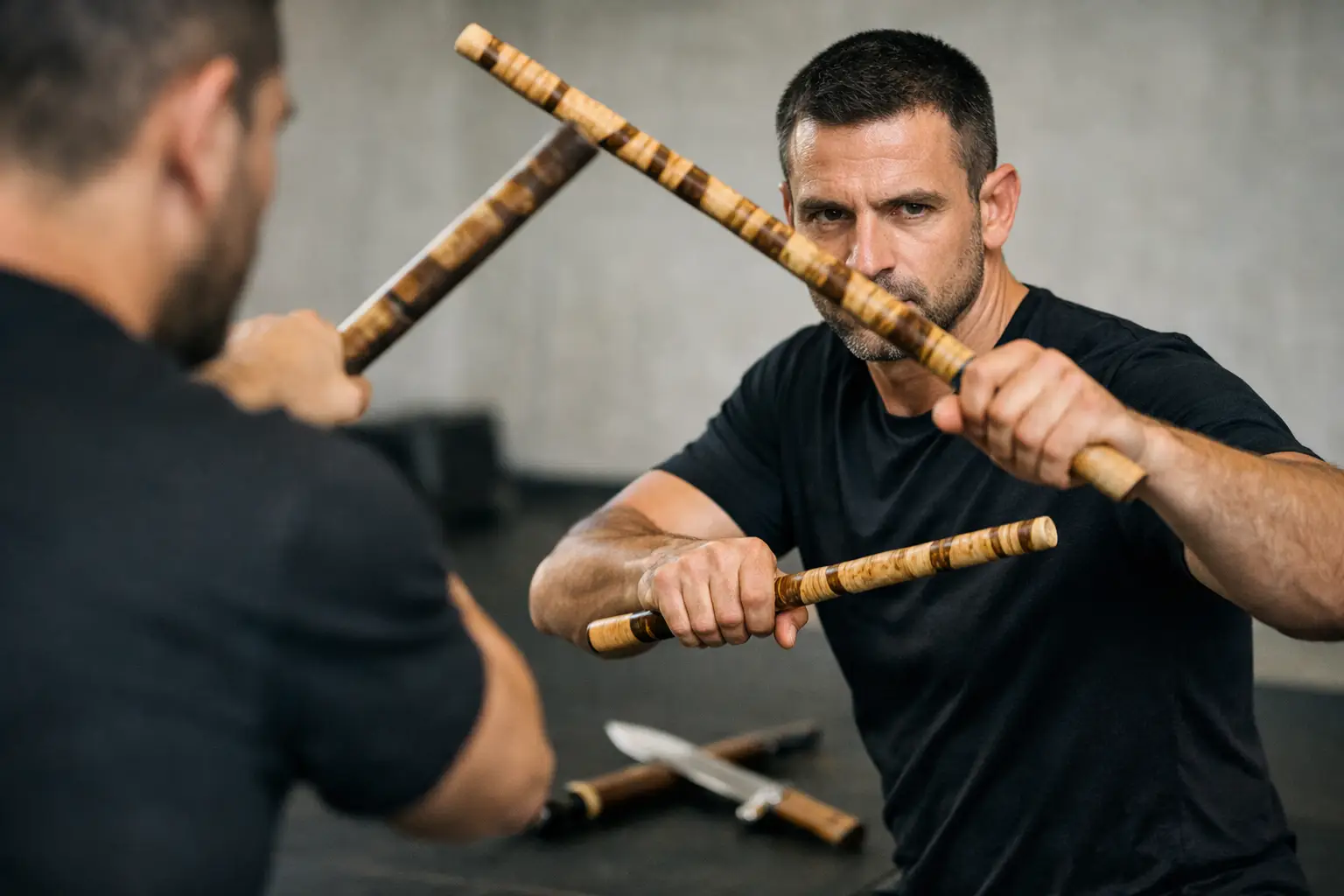
The biggest difference is that Pekiti Tirsia Kali does not treat weapons as an advanced topic saved for later. Weapons are part of the foundation. Students often begin with stick training because it teaches line recognition, distance control, hand-eye coordination, and defensive timing in a very clear way.
That approach also improves empty-hand ability. When you train to read attack angles and move with precision against a weapon, your awareness sharpens fast. You start noticing how little room there is for sloppy footwork, delayed reactions, or wasted motion.
This is one reason people who want practical self-defense often connect with the system quickly. It is not built around point sparring or flashy performance. It is built around surviving pressure, controlling space, and responding decisively.
Beginner guide to Pekiti Tirsia Kali training
A beginner class usually feels more structured than people expect. You are not thrown into chaos. Good instruction breaks the system into manageable pieces so you can build confidence without losing the realism that makes the training valuable.
You will likely start with stance, footwork, and basic angles of attack. Those three elements shape almost everything else. Footwork is especially important because Pekiti Tirsia Kali is not just about blocking. It is about moving to a better position while protecting yourself and creating an opening.
You may also begin with single-stick drills. This is common because the stick gives you a safe training tool for understanding lines of attack and defense. Over time, those same patterns connect to blade awareness, improvised weapons, and empty-hand applications.
Partner drills are a major part of the learning process. That can sound intimidating to beginners, but controlled partner work is one of the fastest ways to improve. You learn timing, distance, and pressure in a way solo practice cannot fully replicate. The key is training with the right pace and supervision.
What beginners learn first
Early training is not about memorizing endless techniques. It is about building a base that holds up under pressure. Most beginners focus on recognizing attack lines, learning how to move off line, protecting the live hand, and developing coordination between the upper and lower body.
You will also hear a lot about range. That is a core idea in Pekiti Tirsia Kali. Different distances call for different responses, and beginners need to learn when they are safe, when they are vulnerable, and when they must act immediately.
Another early lesson is economy of motion. Big, dramatic movements may look impressive, but they are usually too slow or too exposed for close-range defense. Pekiti Tirsia Kali favors compact, efficient actions that do not waste time.
This can feel unfamiliar at first. New students often want to move faster before they can move correctly. In reality, control comes first. Speed develops from clean mechanics.
Is Pekiti Tirsia Kali good for self-defense?
Yes, but the honest answer is a little more specific. Pekiti Tirsia Kali is highly effective for self-defense when it is taught with realism, safety, and progression in mind. The system is strong because it addresses weapon threats, close-range encounters, and fast decision-making.
It also teaches an important truth that many beginners need to hear – self-defense is not a fair fight. It is messy, fast, and often emotionally charged. Training should prepare you for that reality without turning into reckless brawling.
That said, no martial art makes you invincible. Your results depend on consistency, quality of instruction, and how well you handle stress. Good training improves your odds. It does not remove risk.
For adults, teens, and parents evaluating programs, that balance matters. You want training that is serious enough to be useful but structured enough to be sustainable.
What to expect in your first few months
The first stage is usually about adaptation. Your hands may feel awkward. Your footwork may feel slow. You may struggle to track angles while moving. That is normal.
Then something clicks. You start seeing patterns earlier. Your reactions tighten up. You stop freezing when a drill speeds up. This is where beginners often realize the system is not about brute force. It is about reading motion and responding with purpose.
Conditioning improves too, although not always in the way people expect. Pekiti Tirsia Kali builds coordination, endurance, grip strength, and balance. It can absolutely raise your fitness level, but the bigger benefit is functional movement under pressure.
Some students want immediate self-defense results. Others want a long-term practice. The good news is that Pekiti Tirsia Kali can serve both goals. In the short term, you become more alert and more capable. Over time, you build deeper timing, control, and tactical awareness.
Common beginner concerns
A lot of first-time students worry they are too old, too out of shape, or too inexperienced to start. In most cases, that fear is misplaced. A good school meets you at your current level and builds from there.
People also worry about safety because the system has a strong reputation for blade and impact weapon training. That is fair. Serious training should never be careless. Safe instruction uses progressive drills, controlled contact, and proper equipment so students can learn realistically without unnecessary risk.
Another concern is whether weapons training makes sense if your goal is empty-hand defense. It does. Weapons work teaches timing, structure, and respect for range in a way that transfers directly to unarmed situations. In many cases, it gives beginners a clearer understanding of danger than empty-hand-only training.
How to choose the right school
If you are using this beginner guide to Pekiti Tirsia Kali to find a place to train, pay attention to how the school teaches, not just what it teaches. A good program should be organized, beginner-friendly, and serious about practical application.
Look for instruction that explains why movements work, not just what to copy. Look for training partners who help each other improve. Look for classes that build pressure gradually instead of trying to impress beginners with intensity alone.
It also helps if the school offers a broader self-defense framework. At Urban Edge Martial Arts, for example, students train practical weapons awareness alongside empty-hand development, which gives beginners a more complete path for real-world protection. That combination can be especially valuable for adults and families who want training that feels relevant from the start.
Why Pekiti Tirsia Kali keeps beginners engaged
Some martial arts lose new students because progress feels too abstract. Pekiti Tirsia Kali tends to hold attention because the purpose of the training is clear. You can feel when your footwork improves. You can see when your timing gets sharper. You can tell when your confidence under pressure starts to change.
That does not mean every session feels easy. Some days are technical. Some are mentally demanding. Some expose habits you need to fix. But that is part of what makes the system worthwhile. You are not collecting moves. You are building judgment, discipline, and a stronger response to stress.
For many beginners, that is the real breakthrough. They come in wanting self-defense skills and leave with better focus, steadier confidence, and a clearer sense of what they can handle.
If you are curious about Pekiti Tirsia Kali, the best next step is simple – start training with an open mind, expect to be challenged, and give yourself permission to be a beginner. Skill comes with reps. Confidence comes with experience. Both are earned, and both are worth it.